In which Sly + the Family Stone remind us that there was once a time in which all of life’s travails could be reconciled by the singing of a simple song. That’s what the mid-late 1960s were like apparently, particularly if you were in San Francisco, hanging with all the beautiful people, doing all the beautiful drugs, and you had the funk.
Die young and rest assured, some record industry hack will make damned sure no recording that bears your name will remain lost on any shelf. Which, in the case of Gram Parsons, is a good thing, as it got us this straight up, true as nature take on Merle Haggard’s ballad about a guy who’s due to hang tomorrow, and he’s as ready as he’s ever gonna be. All credit to the rest of the Flying Burrito Bros, too, of course.
Ian and Sylvia being the Tysons (husband and wife) and that rarity among Canadian artists of their era – they made it before government-imposed radio play quotas became a thing. “Special thanks to my friend Andrew’s mom, because she was the only parent I knew who seemed to generally care about music, and thus had a few decent records. Nothing heavy mind you – just good solid easy-to-listen-to options like Simon and Garfunkel, Neil Diamond, Moody Blues, and more obscure stuff, which Andrew and I spent many hours exploring – both of us still young and fresh enough to dig something even if it wasn’t driven by heavy guitars and appeals to Satan.” (Philip Random)
“One more from that lost and forgotten alt-reality wherein the 1980s were everything they should have been and a record like the Undertones‘ Love Parade hit the toppermost of the poppermost – melodic, soulful, full of light, and so damned popular we all got sick of it. But it wasn’t so we didn’t, so thank all gods for that. And man, that Feargal Sharkey could sing.” (Philip Random)
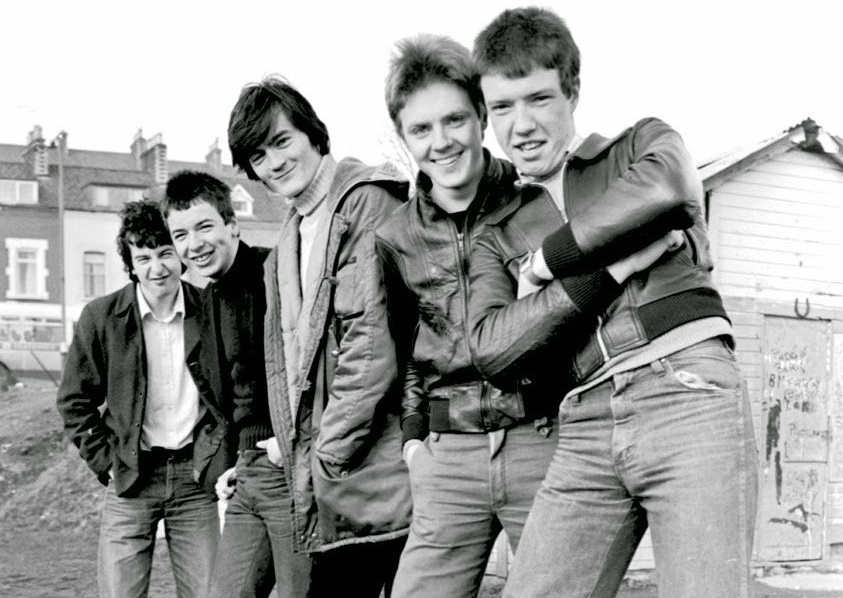
The Au Pairs didn’t stick around for long, and they never exactly cracked the charts, but they definitely had something for their time. And a darned interesting time it was, the early 1980s, when white punks and other related fringe dwellers were discovering funk and politics in more or less equal measure, messing around with them, not being remotely pure, and the culture was all the better for it.
“Strong sense of groove and melody, lots of cool, modern dub tricks – The Strange Parcels seemed to have it all when I first heard them back in 1991 care of On-U Sound‘s Pay It All Back Vol.3 (which remains one of the great compilation albums of any era, as do pretty much all the others in the series). But then, that was about it. An album would eventually show up a few years later, but I was onto other things by then, as was the world, I guess. But I did keep going back to Pay It All Back Vol.3 in general, To Be Free in particular, key ingredient in many a mixtape, dragged to many a house party, bonfire, mountaintop. Soundtrack for this slow apocalypse, still ongoing.” (Philip Random)



 Randophonic