31. right on for the darkness

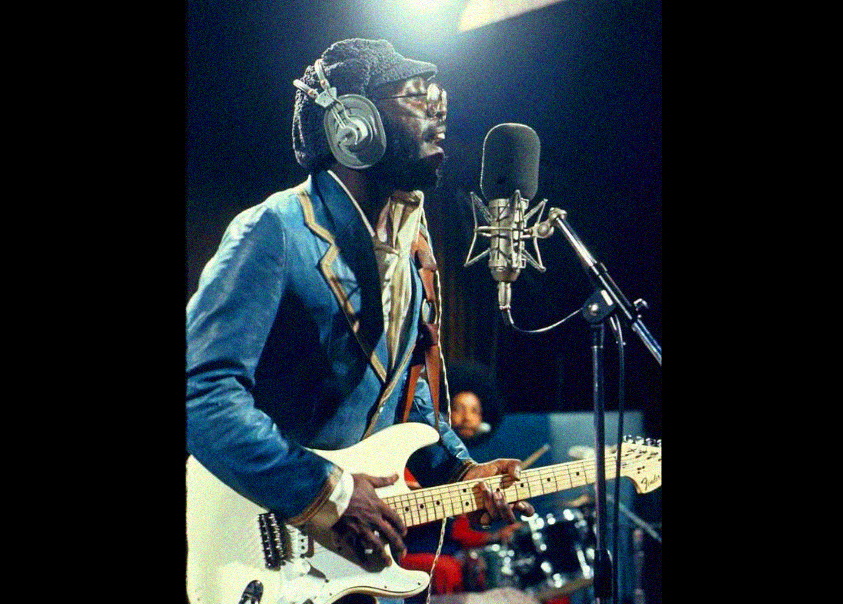
“I guess I probably heard this Curtis Mayfield epic back when it was new via the local cool FM radio station (1973 being a year before all that started going to hell). But I wouldn’t have been up to it. I wasn’t cool enough yet. Its depth-beauty-power-significance would’ve breezed straight past me. But jump ahead a decade and now I was ready for the album called Back To The World found in a friend’s collection. ‘Back to the World’ being how American GIs in Vietnam referred to their return home to the normal every day life you’d left behind at least a thousand years ago. Which if your blood was to some degree African too often meant just trading one war for the another anyway.

Betrayal in a word. A betrayal heard in the Mr. Mayfield’s intensely masculine falsetto (as somebody else described it). But there’s more than just that going on in Right on for the Darkness, musically, and production wise, a complexity of ambition and beauty that … well, sometimes you’ve just got to say yeah, right on, this is something only music can do. It can take you there, one foot in heaven, the other in hell. Which even if I hadn’t spent any of my time in a proper ghetto, I could still sort of relate, the suburbs offering their own kinder, gentler, more deceptive nightmares. Not many get murdered and nobody starving. But they do suffocate. And good luck trying to get out.” (Philip Random)
41. some velvet morning

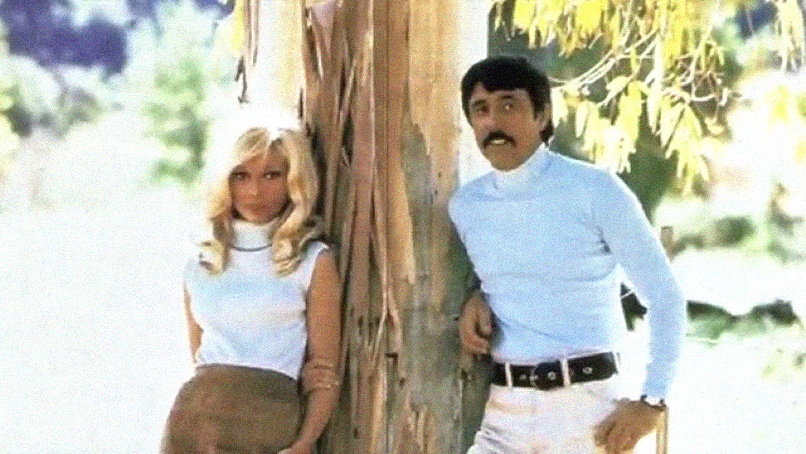
“In which Frank’s little girl Nancy (Sinatra, that is) and a shady older gent named Lee (Hazelwood) deliver the heaviest, most beautiful easy listening track I know — guy so wasted he can’t even open his girl’s gate, but some velvet morning all dragonflies and daffodils, he’ll be up to it. Maybe he’ll even tell her about Phaedra. Which I always figured was heroin, yet suburban somehow. Because nothing feels more desperate than a junkie in a bungalow with a fine trim lawn, the utilities paid, the appearances kept, the muzak on the radio morphing into something luxuriously caustic — the split level dream corroding into a void the size of a solar system, feeling no pain, but burning up regardless. Or something like that. Anyway, great song. Great album. Great sense of time and zeitgeist, a whole world gone static yet doomed to implode. What was it about America, 1968?” (Philip Random)

68. halo of flies

“The fourth Alice Cooper album, the one known as Killer, is as fine a slice of epic rock spectacle as the early 1970s delivered, and they delivered a lot. I distinctly remember the first time I heard it, at my friend Malcolm’s, who immediately went out and bought it when the news hit about a kid a few suburbs over who’d hung himself trying to imitate the ‘hanging trick’ pictured on the calendar found inside. The newspapers were all over it for a while. Fourteen year old boy kills himself because of Alice Cooper. Which, of course, is as deep as any adult ever went when it came to Alice. The pictures. Their loss, because there was nothing shallow about the music. Creepy, dynamic, erupting with grotesque passion and cool … particularly Halo of Flies. Apparently, it’s about espionage. Halo of Flies being an evil outfit working deep networks of counter-intelligence-terrorism-revenge-extortion-perversion, and thus they must be smashed. And our man Alice and his crowd of weirdoes are up to the task, whatever it takes, even a little Rogers + Hammerstein if needs be. Would’ve made a helluva movie.” (Philip Random)

85. child in time

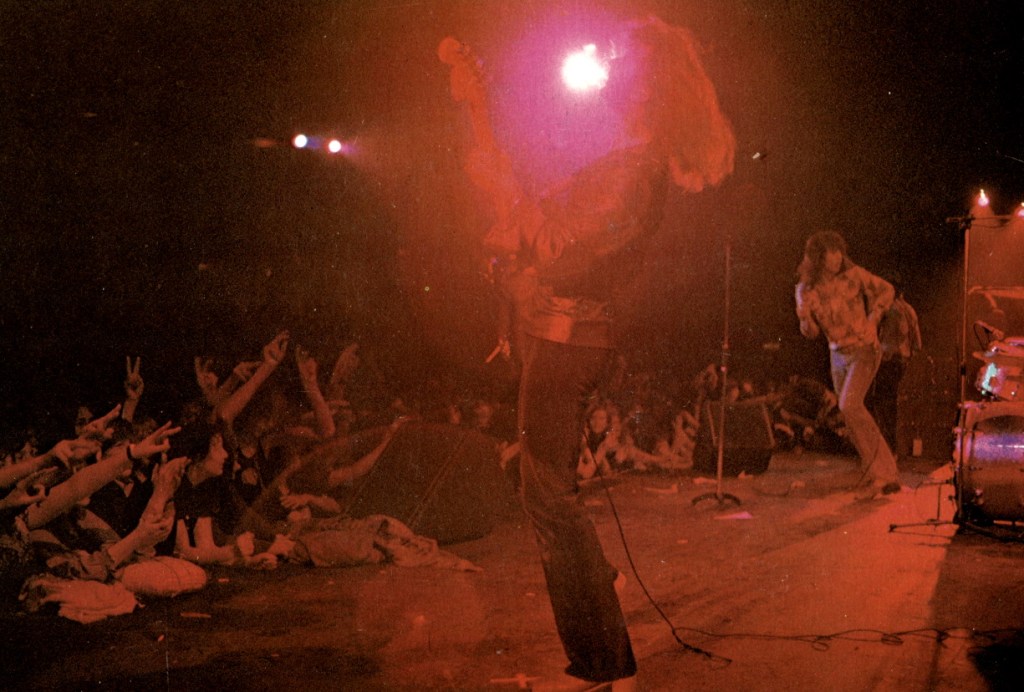
Deep Purple‘s Child In Time is one of the first times I ever really connected with a lyric, the one about the blind man shooting at the world. I guess thirteen year old me had enough of a grasp on randomness and karma and the overall crumbling state of the post-60s zeitgeist to have no problem buying in. Because there were blind men out there, figurative and otherwise. They did have guns and they were just letting rip. Of course, Ian Gillan’s vocals helped in this regard, always one more octave to be nailed with all due terror and glory, this being the guy who played the title role in the original Jesus Christ Superstar. So heaven really was the limit.

“And then there’s the band itself, jamming through the extended middle section like the world was ending (and it probably was), particularly the live Made In Japan version, Made In Japan being what one might call the definitive 1970s double live album. It was certainly required listening in every big brothers’ beater of a car, always on 8-Track tape, soundtrack for bombing recklessly around suburbia as if there was actually a reason to. And maybe there was. I do remember one rather psychedelically enhanced conversation with old friend Motron wherein it was decided that maybe the entire reason for our particular suburbia to have existed was to give us young folk (boys mostly) something to tear around in at absurd speed, thus justifying Deep Purple at the peak of their attainments. If that makes sense. And even if it doesn’t, what do you expect from men who spent their childhoods ducking blind men with guns? Figuratively and otherwise.” (Philip Random)

87. if music could talk

“Second of two in a row from the Clash‘s absurdly abundant 1979-80 phase which culminated in the six sided monster known as Sandinista – If Music Could Talk being (for me anyway) probably that album’s key track. Not for any grand power or standalone attainment, but simply for its inclusion — that a band as righteously raw and committed as The Only Band That Mattered™ could deliver such an oddly sweet and beatific ode to not rebellion-revolution-insurrection, but music itself. Which gets us back to that suburban house fire, 1981 sometime, the mixtape I had playing on the walkman care of my good friend Simon Lamb. If Armagideon Time was more fuel for the fire that was our whole broken and corrupt Cold War western culture, then If Music Could Talk, which came after, was some kind of next chapter, an odd little path leading wherever it is that only music can go, not even poetry can keep up with it, though there is a pile of poetry in If Music Could Talk, the words spilling like rain down both channels of the stereo mix, not making sense so much as easing beyond it, because we already knew it way back then even if we couldn’t quite find the words: the revolution, or evolution, or whatever it was going to take to somehow NOT annihilate ourselves in some kind of forever war – it could not be rational.” (Philip Random)

132. inner city blues (make me wanna holler)

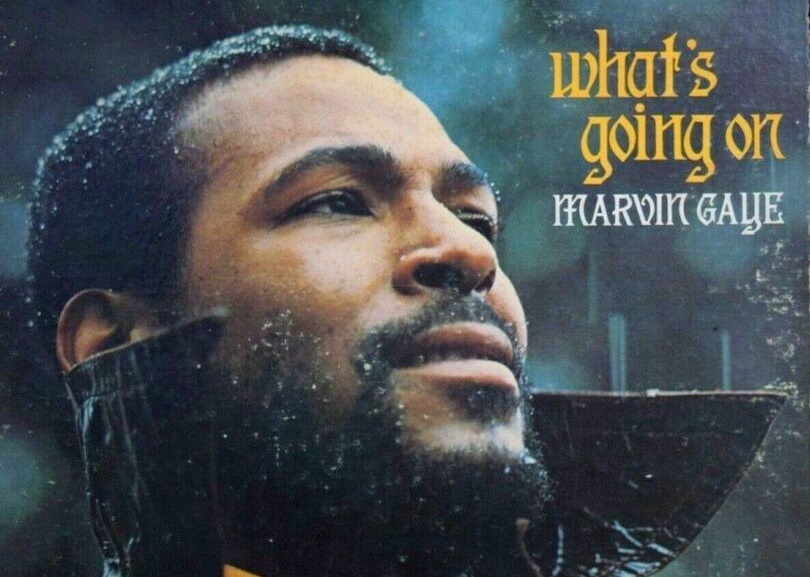
“For all the suburban whiteness of my so-called tweens, at least the DJs at the local FM rock station were still allowed to be halfway cool. So you can bet they were digging deep into Marvin Gaye’s What’s Going On, which truly is one of the great †albums, every note, every texture all flowing† together like one vastly complex song. So I’m sure I heard Inner City Blues†† when it was still pretty new, even if I wasn’t aware of it. Just part of the ongoing flow that was filling me in and filling me up with what was really going on† out there in that part of the world that wasn’t organized into easy suburban shapes.” (Philip Random)