373. the murder mystery

https://www.youtube.com/watch?v=6DHvBSqfnVs

“The raw, reductive simplicity of the Velvet Underground is one of the foundation blocks of everything that has mattered since 1965, musically or otherwise. But their story is not remotely complete without a chapter or seven devoted to their more avant concerns, which Murder Mystery illustrates rather nicely, coming across like premeditated murder of all conventions, expectations, intentions. John Cale was gone by 1969, but you can’t help but feel that when he heard it, he thought, man, I wish I’d had a piece of that. Deadly and mysterious and not entirely unmusical.” (Philip Random)

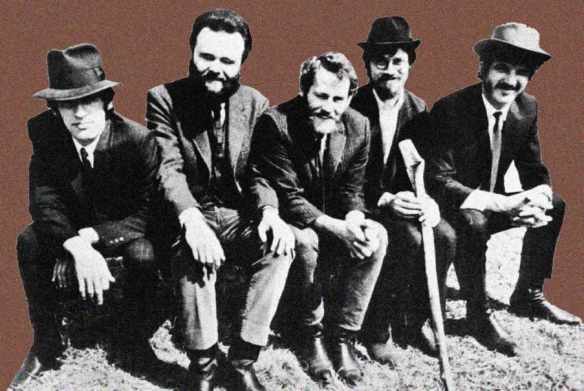
VelvetUnderground-1969-hangingOut

374. inside looking out

“It’s like that classic Spinal Tap line when it comes to Grand Funk Railroad, there being such a fine line between clever and stupid. And certainly, based on some of their liner notes, there was more than a little stupid in Grand Funk. Yet they do most emphatically nail it with Inside Looking Out. The clever, that is. Actually, call it genius, and note the use of the present tense. Because that’s what genius does. It transcends time, surfs impermanence, negates stupidity. Particularly when it’s delivered as loud and proud as Mark Don + Mel deliver it here. Ass is kicked.” (Philip Random)

GrandFunk-billboard

375. war in the east

DOA saved my life any number of times in the 1980s, mainly through their live shows. From the back of auto body shops to abandoned youth clubs to at least one high school gym to the Arts Club on Seymour (still the best damned live venue the Terminal City has ever had) to at least two sold out Commodore Ballrooms, to some impromptu acoustic messing around off the edge of a movie set – it was never pretty, always somehow beautiful. And I’m pretty sure they did War In The East every time, their only reggae song, because it slowed things a touch, clarified a few key points. Fighting one another – killing for big brother. Same as it ever was.” (Philip Random)

DOA-live-1980s

376. when I paint my masterpiece

“I think I prefer the Band’s take on When I Paint My Masterpiece to Dylan‘s. It feels a little more road weary, earned, a lonely night amid the rubble in Rome by way of deepest darkest Arkansas (or perhaps Ontario), somewhere vast and godless, and all those million miles in between playing rock and roll. Great song either way.” (Philip Random)

Band-1971

377. magnificent seven

“In retrospect, we realized that The Magnificent Seven was the Clash taking on hip-hop, but in early 1981 when Sandinista first arrived, nobody in suburban Canadian wherever had even heard the term yet. So for me, it felt more like a riff on Bob Dylan, subterranean and homesick — definitely New York City in all of its turn of the decade corrosion and despair, and yet madly fertile anyway, not unlike the world as a whole at the time. The acid helped in this regard. I feel I should I apologize for this, all the acid references that seem to pop up whenever some kind of broader cultural view is required as to what really went down in the 1980s (my angle on it anyway). But why should one apologize for telling the truth? The Clash never did. Even when they were wrong.” (Philip Random)

Clash-1981-backstage

378. power and the passion

“I remember seeing Midnight Oil live when they were as big as they’d ever get (late 1980s sometime), saving the world from ecological ruin one song at a time. They introduced Power and the Passion as a surfing song, which makes sense, because there’s nothing more powerful or passionate than a big wave, all that planetary evolution and movement coalescing across four billion years of evolutionary ebb and flow and yin and yang to conjure this fabulous monster which, if your skills are to up to it, you can actually ride. So not man vs nature so much as man in tune with it, which, in their prime, The Oils were just powerful and passionate enough to make you believe was possible.” (Philip Random)