The entirety of Talking Heads’ third album Fear of Music is essential, but I Zimbra stands out for broad hint it offers of what would happen if Talking Heads (at the vigorous encouragement of their producer Brian Eno) were to maybe leave the whole punk/new wave thing behind, take a wild dive into the whole world, Africa in particular. Shrug it all off as cultural appropriation as some have over the years, but things were different then, the world was bigger, our maps magnitudes less complete. And anyway, things seem to be correcting of late.
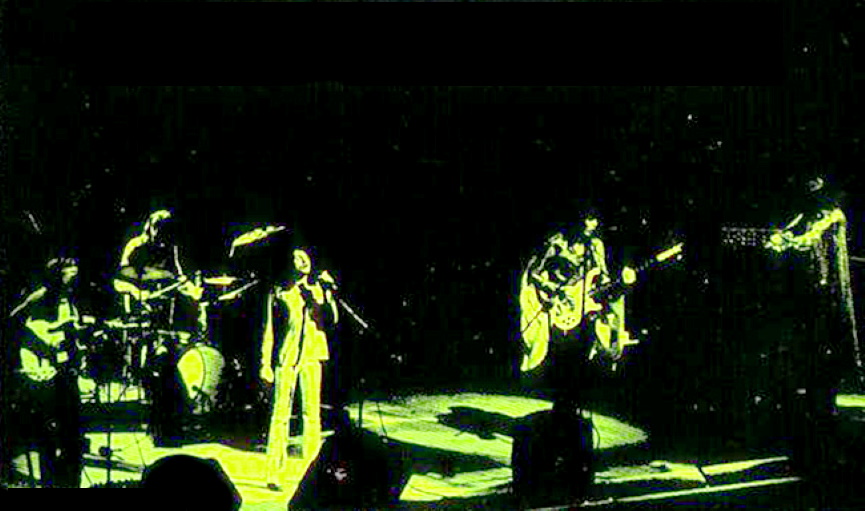
“There is absolutely nothing wrong with the original 1971 studio recording of Yes’s Perpetual Change. It just doesn’t go as far as strong as gobsmackingly wow!!! as the 1972 live recording that showed up on the triple live set Yessongs. Because they really do set the atmosphere on fire here, one of the last tracks ever recorded with drummer Bill Bruford, so yeah, the classic Yes lineup (my version of it anyway), which does need to be raved about if only for that point maybe halfway through Perpetual Change where the band are effectively playing two completely different songs at the same insane time, and it works, finally blowing off into a feedback overload that quickly segues into a Jon Anderson vocal harmony, and then BAM!!! into an extended outro, the tightest band on the planet at the time (seriously, even Led Zeppelin had to be looking over their shoulders in 1972) bouncing back and forth from improvised bits to insanely abrupt changes, on and on, higher and deeper until the only real flaw, which is the overextended drum solo (not bad, just not necessary). As a musician friend once put it, Perpetual Change is the secret to everything that was great about Yes, because they were perpetual change (up until around 1975 anyway), not just evolving from album to album, but within the songs themselves. Everything was possible and they had the smarts (and the chops) to make it so.” (Philip Random)
“Love and Rockets definitely felt fresh when they first hit in around 1985. Ex-Bauhaus players lightening up some, delivering solid psyche infused rock and pop at a time when pretty much nobody else was thinking that way. But by the time their third album hit, Earth Sun Moon, I guess I was looking elsewhere, because I didn’t really notice No New Tale To Tell until years after its release. In fact, it was the flute solo that hooked me via somebody else’s mixtape. Not since Jethro Tull …” (Philip Random)
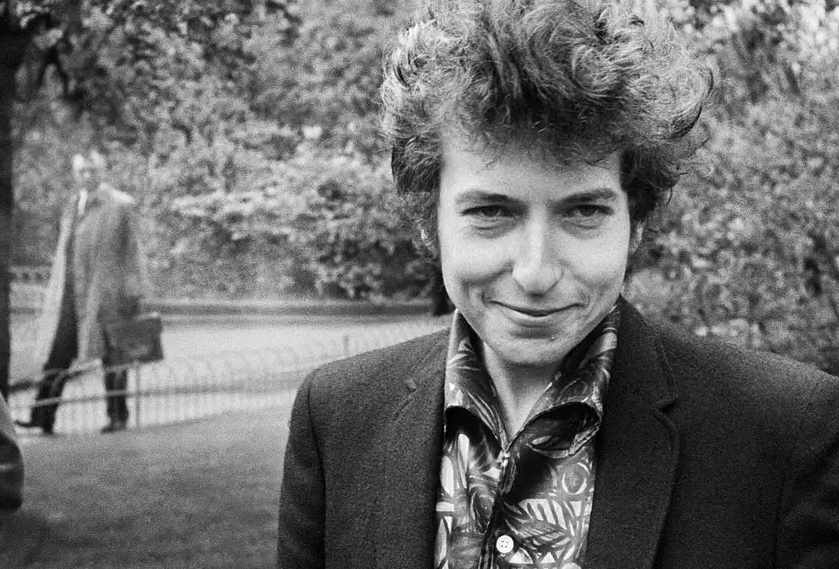
“Tombstone Blues comes immediately after Like a Rolling Stone on Bob Dylan’s sixth album, Highway 61 Revisited (the one that changed everything forever). The thought that comes to mind is, hard act to follow, but Dylan being Dylan, he quickly annihilates that concern. Note the use of present tense. This stuff is still very much alive, virulent even. The poetry, that is. Lately it’s been the geometry of innocent flesh on the bone causing Galileo’s math book to get thrown. But maybe six months ago, it was the king of the Philistines, his soldiers putting jawbones on their tombstones and flattering their graves. And back in the early 1980s, it was definitely John the Baptist (after torturing a thief) looking up at his hero the Commander-in-Chief, saying, tell me great hero, but please make it brief, is there a hole for me to get sick in? In other words, yeah just call it Dada, but it’s a fine and enduring Dada. Particularly if you’re driving long distances, gobbling dexedrine, smoothing the edges with cheap red wine, you hit the Pacific coast at sunset, northern California somewhere, take some pictures, but for some reason all you’ve got is black + white film. So the moment is captured without pigment, the sky pure white, like an atom bomb. Which is more or less accurate, I think. If the world didn’t end in 1965 when Dylan released Highway 61, then it was June 1989, and I’ve got pictures to prove it. Which makes what we’re going through now just one more layer of the proverbial onion — everything keeps peeling away.” (Philip Random)
“In which the band known as Wire deliver the future circa 1979 from one of thegreat albums. Call it power pop, I guess, all angles and perhaps cold light. As for the map reference, I looked it up. It’s a placed called Centerville, Iowa, for no reason I can grasp … other than being the absolute center of Absolute Middle America (speaking of psychic topography here), which is about the last place you’d expect something like Map Ref 41°N 93°W to ever be a hit. Certainly not in 1979.” (Philip Random)
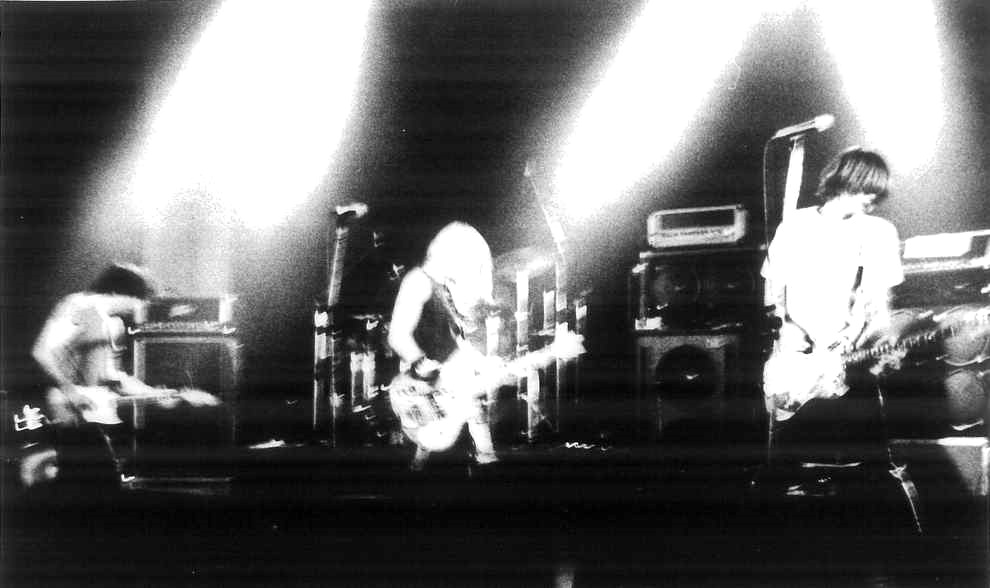
“Silver Rocket may well be the perfect Sonic Youth nugget. On one level, it’s a ripping cool pop song about riding a silver rocket, I guess, or perhaps heroin. On another, it’s a metaphysical hand grenade that blows a gaping hole through the reality barrier into the next nineteen dimensions. And it accomplishes all of this in barely three minutes.” (Philip Random)



 Randophonic
