635. click clack

In which the good captain (Beefheart, that is) kicks out more of those blues so authentic it can only feel surreal to hear them coming from a white man. But then you actually listen to what’s going on and you realize, this isn’t authentic at all. It’s mutant, working curves and angles that feel positively alien. Of course, he did go to high school with Frank Zappa. Which raises the question, who the hell else went to Antelope Valley High back in the day?  And what was in the water?
CaptainBeefheart-1972

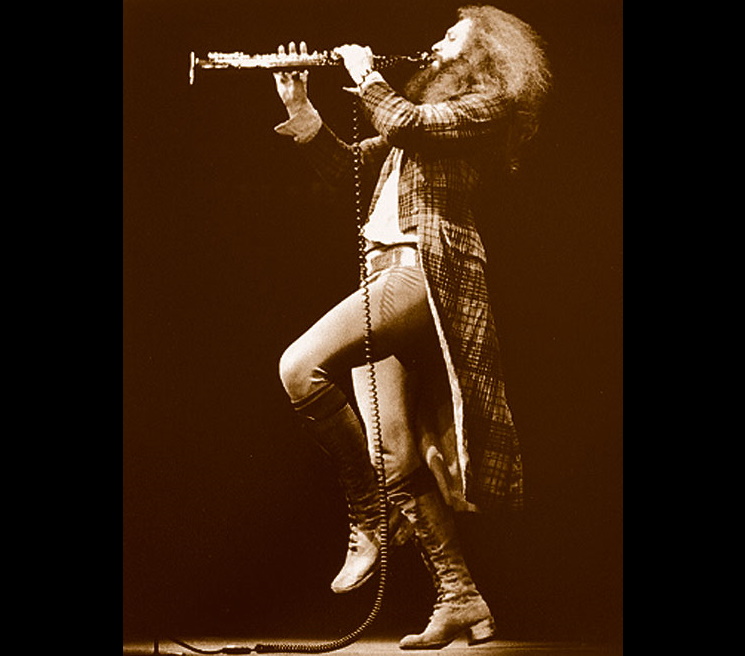
637. A Passion Play

“It seems insane to even think about it now, but in 1972 Jethro Tull conquered the world with a 43-minute-44-second song called Thick as a Brick that comprised the entire album of the same name. Adventurous, dense, continuous, it even half made sense, both musically and lyrically. So what did Ian Anderson (Tull main man) and his talented crew do for a follow-up? Another album long song, this one called A Passion Play, which proved even more dense and adventurous than Thick As A Brick. And I’m still trying to figure it out. Actually, that’s a lie. I gave up a long time ago, because as a friend concluded, ‘Man, you’ve gotta be Ian Anderson’s f***ing brain to know what any of that’s supposed to mean.’ Which doesn’t mean I ever stopped listening to it. I guess I just pretend I’m Ian Anderson’s brain for a while.” (Philip Random)

(image source)

645. Benedictus

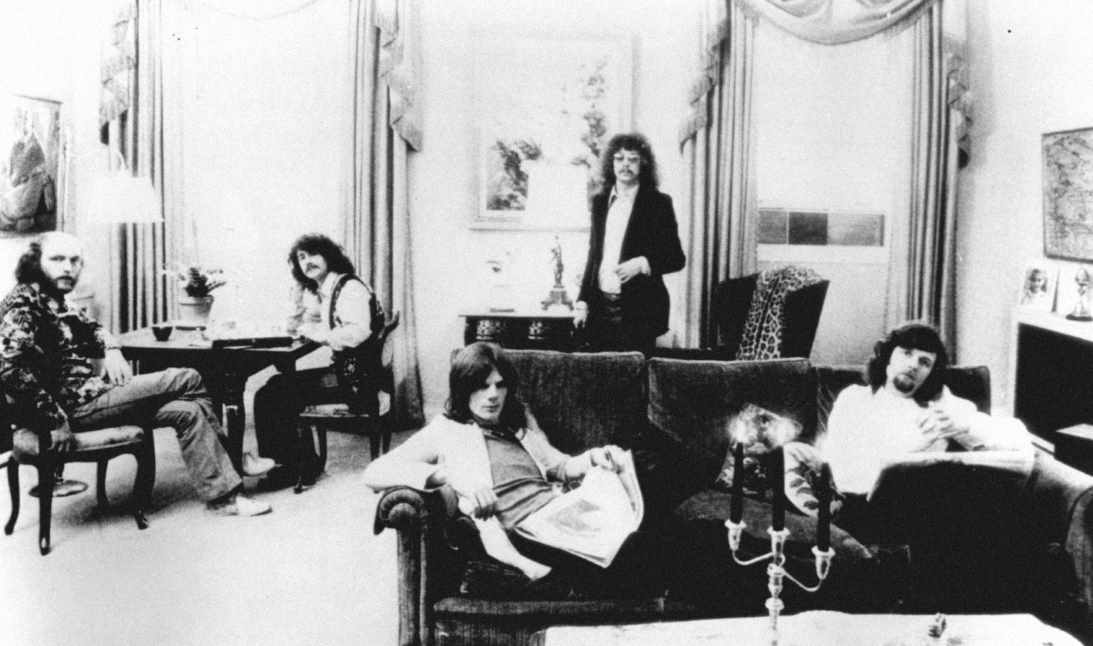
“As the story goes, Strawbs main man David Cousins was rather choked at losing keyboard whiz kid Rick Wakeman to Yes. So, as was popular at the time, he consulted the Classic of Changes (aka the mystical I-Ching), which gave him a few lyrics if nothing else. ‘Humble must he constant be, where the paths of wisdom lead, distant is the shadow of the setting sun‘. Good enough for the lead-off track from 1972’s Grave New World, which I’d say was their best album, as if losing Wakeman had lit a fire under them. They’d prove the bastards wrong. They’d expand the known universe without him. And they did, even if hardly anyone noticed. One of the best damned bands most people have never heard of, let alone heard.” (Philip Random)

Strawbs-1972

647. nothing is everything

“When the Who did it, they called it Let’s See Action, but a title like Nothing is Everything was far more profound to my thirteen year old mind. I remember taping Pete Towsend’s version direct from FM radio (microphone jammed up against the tinny speaker, my little brother and sister being told to ‘Shut Up’ in the background). It got a lot of play for a while, like all my handmade cassettes. Then a couple of decades intervened and I pretty much forgot all about it. What eventually hooked me again (late 1990s now) was the lyrics and how eloquently they riffed on all the revolution everyone was amping for back in those barely post-60s days, and how doomed it all was. Rumour has it / minds are open / then you must fill them up with lies …” (Philip Random)

PeteTownsend-leap

655. Siberian Khatru

It’s hard to put in context just how hot the band known as Yes were come 1972’s Close to the Edge, except just to say that a song as wired, as wild, as complex, as challenging, as virtuous as Siberian Khatru was pretty much required listening for anyone who was even half-serious about staying in touch with the zeitgeist. “I know where Siberia is. I have no idea what a Khatru is. Except to say it must have something to do with reaching but not quite grasping the essence of all our striving, our yearning, our dreams – the Grail itself, holy and unfathomable. But careful way out there, you don’t want to fall off. The edge, that is. Tread lightly. Enjoy the view.” (Philip Random)

663. well (baby please don’t go)

As already noted, John and Yoko’s Some Time in New York City has to rate as mostly disastrous, there being far too much Yoko Ono in the mix, and the sort of one-note politicking that feels like a repeated kick to the head. And yet there are a few moments such as the live take on Well (Baby Please Don’t Go) which happens to include Frank Zappa (and at least some of the Mothers) tearing things up with all due savagery and respect. Even Yoko’s saxophonic wailing kind of works, at least for a while.