691. the call up

“Have I raved enough yet about how indispensably, imperfectly essential the Clash’s Sandinista is? Probably not. Three slabs of vinyl, thirty-six songs, jams, dubs, meltdowns, whatever you want to call them. Not World Music so much as what the world actually sounded like in 1980-81, including war, here-there-everywhere, young men being called up, sent off to do and die. Which is what The Call-Up‘s about (from about halfway through Side Four). Don’t go, young man. Don’t fall for the patriotic bullsh** of old men whose blood won’t be doing the spilling. Remember that rose you want to live for.” (Philip Random)

Clash-1981-03

705. mea culpa

“In which David Byrne and Brian Eno step outside of the Talking Heads for a bit and end up changing music forever. No, My Life in the Bush of Ghosts didn’t invent sampling (Holger Czukay was already messing around with disembodied voices inside and out of Can), but it did rather open the floodgates, with Mea Culpa proving ideal for heroic doses of LSD, assuming you were up to it. Which I wasn’t at least once — a gloomy January dusk, a riverbank in the flight path of the local airport, with a church in the distance. I became convinced a plane was going to crash into it. I don’t remember the rest.” (Philip Random)

Eno+Byrne-tea

737. it’s obvious

The Au Pairs didn’t stick around for long, and they never exactly cracked the charts, but they definitely had something for their time. And a darned interesting time it was, the early 1980s, when white punks and other related fringe dwellers were discovering funk and politics in more or less equal measure, messing around with them, not being remotely pure, and the culture was all the better for it.

AUpairs

744. the visitors

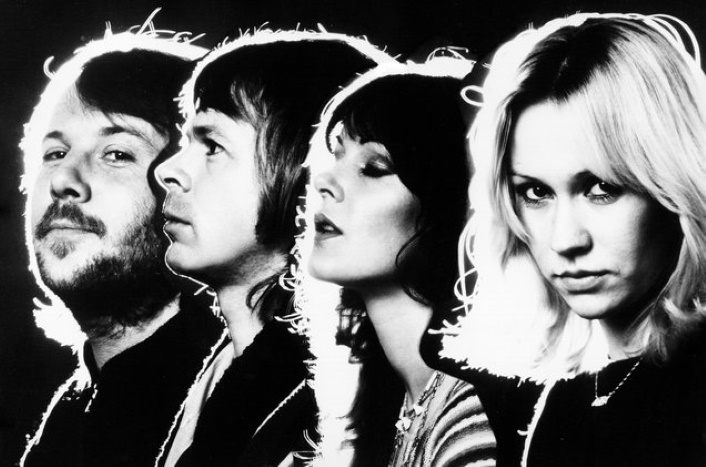
“Listening to Abba is like having a bath, then going to bed with freshly cleaned sheets. Or so I heard it put way back when, the 1970s. But by the time the 1980s hit, the culture no longer had time for such luxuriant cleanliness. So Abba effected a change, got darker, deeper, paranoid even. Which worked for me, but I can’t say I’ve ever heard The Visitors popping up at a wedding.” (Philip Random)

(photo: Michael Ochs)

746. healing

The genius of Todd Rundgren is that he can do anything – pop, soul, rock, prog, abstract avant whatever. The worst thing about Todd Rundgren is that’s exactly what he does a little too often — anything and everything all at the same time, and it all just ends up getting in the way of itself. But not so the title track of Healing (which ends up filling all of side two). It’s 1981 and drum machines and synths and sequencers are the cool new toys of the moment, and, genius that he is, Todd knows exactly how to play with them, to genuine therapeutic effect.

747. the great pretender

“It says 1974 on the cover but Brian Eno‘s second solo album Taking Tiger Mountain (by strategy) will always be pure 1981 for me. Weird and oft times jagged pop that was pretty much perfectly in synch with the times and thus not at all afraid to just dissolve into abstraction if necessary. Which was fine by me given all the acid I was taking. I needed those dissolutions, like at the end of The Great Pretender when the crickets (or whatever they are) just take over, suck us into the insect realm, alien and strange.” (Philip Random)

BrianENO-1974-3