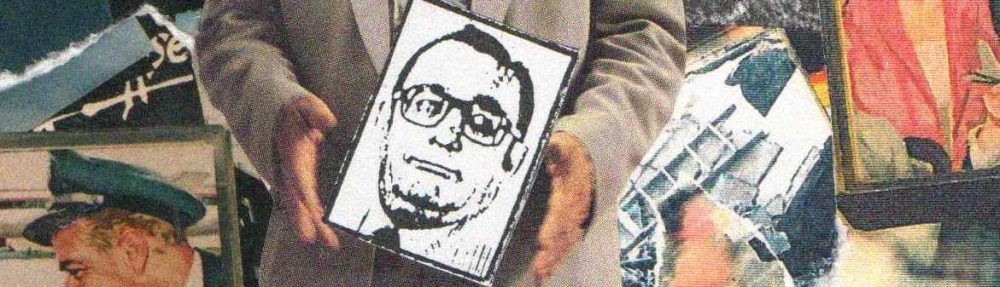
In which Rupert Hine (better known as producer than performer) reminds us that the best music of the early 1980s generally wasn’t that nice at all deep down inside, but rather deep with shadow, strange eruptions, queasy feelings of madness, suspicion, and vertigo. The album Immunity is a rare gem, full of such stuff. Nothing remotely normal about any of it.
“I cannot tell a lie. The first time I heard the name Dead Kennedys, it kind of took my breath away. I didn’t say anything out loud or anything, but I liked the Kennedys, was old enough to remember the assassinations of both JFK and RFK. And now here was this punk band exploiting them. Not that I really even listened to the music. It was just trash and exploitation, right? With a name like that! It took 1981’s In God We Trust EP to finally set me straight, particularly We’ve Got A Bigger Problem Now (which I later discovered was a reworking of California Uber Alles from their first album). It was the lounge bit at the beginning that hooked me, the part about happy hour being enforced by law, and a jar of Hitler’s brain juice in the back, and Emperor Ronald Reagan born again with fascist cravings. Welcome to the future. Ready or not.” (Philip Random)
“It took me a while to warm to what Brian Eno was up to come the later 1970s. Actually, what it took was a cold night, a small town, a dose of weapons grade LSD, a bunch of people playing foosball, taking it way too seriously. Meanwhile, the soundtrack was the Doobie Brothers, Steely Dan, other resolutely non-psychedelic options. Something Has To Change, said a voice in my head (several million of them actually). But I couldn’t change the people or the town or even go outside really, it was too f***ing cold. But I did have this Brian Eno cassette in my pocket that a friend had recently slipped me. I could change the music. Before And After Science, said the cassette, and inevitably, effectively, seductively, about four tracks in, energy fooled the magician, and nothing’s ever really been the same.” (Philip Random)
“The whole of Holger Czukay‘s third solo album, On The Way to the Peak of Normal, is a weird and mysterious and wonderful gem, with Ode to Perfume (the full version which fills the entire second of side of vinyl) particularly notable because of that haunting melody at the beginning – actual chunks of somebody else’s song that I vaguely recognized but could never place (sampling before they called it sampling), until I finally did place it, but only because a friend’s mp3 shuffle randomly threw the two of them on pretty much one after another. It’s Suspicion made famous by Jimmy Stafford, a genius piece of paranoid pop if there ever was one.” (Philip Random)
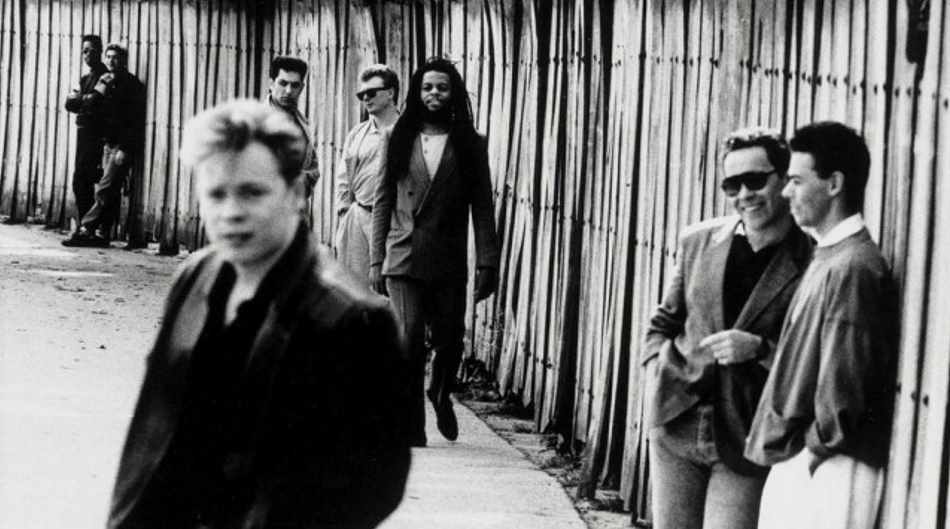
“I’d heard dub before I heard UB40’s Present Arms in Dub. I just didn’t know it was a thing – this notion that now every song and/or album could have both its official version and its VERSION version. Some were crying rip-off, of course, accusing labels and artists of double-dipping (or whatever). But there are always loud idiots when something cool and new hits. In the case of Present Arms (the dub version), that equaled an album that was better than the original (and probably anything else UB40 would ever do) because like Sun Ra said (and Hawkwind too for that matter), space is the place, and where there’s a version, there’s always more space – for your mind, your imagination, your soul, room to move and groove, perchance to grow.” (Philip Random)
Ultravox started out as sort of glam infused new wavers, but after three cool but not particularly successful albums, their label dumped them, front man John Foxx went solo, and the other members wandered off in various directions. Which would have been the end of things if keyboardist-violinist Billy Currie hadn’t run into Midge Ure (his first name was actually Jim) while working with original New Romantics, Visage. The rebooted Ultravox took the New Romantic thing and ran with it, first with Vienna, then 1981’s Rage In Eden, with the title track a study in contained, cinematic noir. Like peering out a window at the new decade as a thick fog rolled in – interesting times whether you wanted them or not.