30. marquee moon

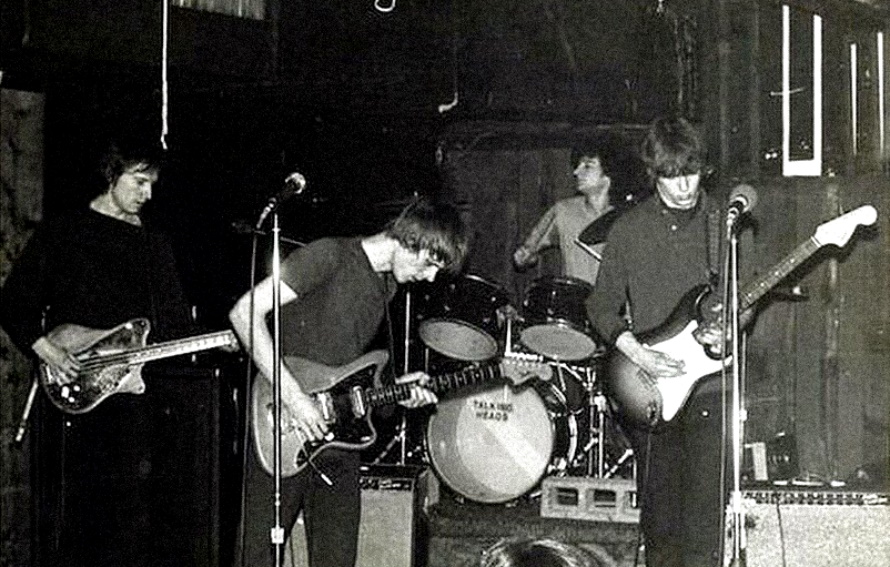
“In case you haven’t figured it out already, I’m a sucker for an epic, and Marquee Moon (the song) is definitely that. Title track of Television’s first and best album, and doubly lovable for how it righteously pulled the rug out from certain Stalinist tendencies of the punk scene at the time — way too many hard and fast rules getting laid down as to what drugs could be taken, the colour of your leather jacket, the length and style of your hair, how long a song could be. Which is all dumb, all opposite to the anarchic fervour that ignited punk in the first place. No rules, no boundaries, no nothing – just don’t be f***ing boring. And Marquee Moon (song and album) nail that. So yeah, maybe Television weren’t punk, but they certainly came from punk. So if a riff said, ride me to f***ing eternity, they were going to ride it, taking their orders from the music, not some tiresome Machiavellian assholes who, in another era, would be deciding what words could be used in a poem, what symbols … and who should be disappeared come the revolution.” (Philip Random)  
31. right on for the darkness

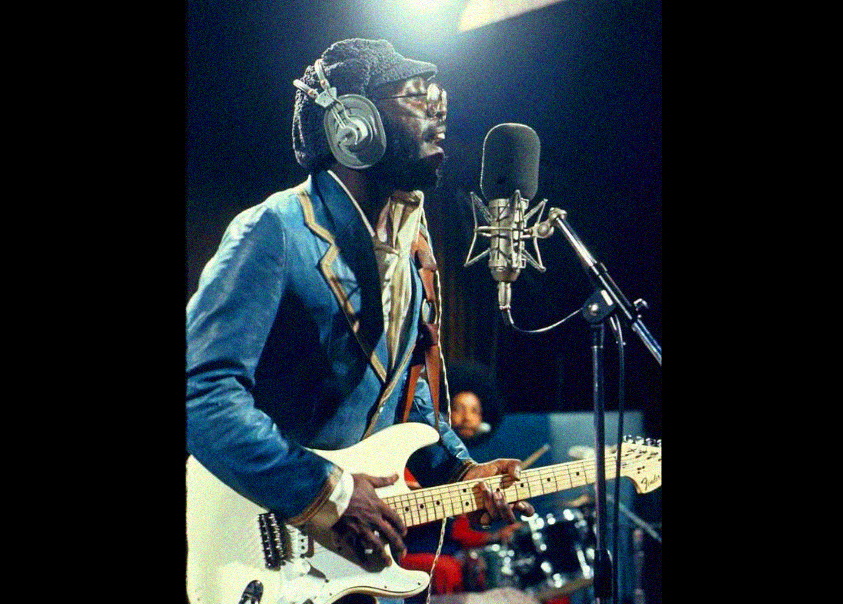
“I guess I probably heard this Curtis Mayfield epic back when it was new via the local cool FM radio station (1973 being a year before all that started going to hell). But I wouldn’t have been up to it. I wasn’t cool enough yet. Its depth-beauty-power-significance would’ve breezed straight past me. But jump ahead a decade and now I was ready for the album called Back To The World found in a friend’s collection. ‘Back to the World’ being how American GIs in Vietnam referred to their return home to the normal every day life you’d left behind at least a thousand years ago. Which if your blood was to some degree African too often meant just trading one war for the another anyway.

Betrayal in a word. A betrayal heard in the Mr. Mayfield’s intensely masculine falsetto (as somebody else described it). But there’s more than just that going on in Right on for the Darkness, musically, and production wise, a complexity of ambition and beauty that … well, sometimes you’ve just got to say yeah, right on, this is something only music can do. It can take you there, one foot in heaven, the other in hell. Which even if I hadn’t spent any of my time in a proper ghetto, I could still sort of relate, the suburbs offering their own kinder, gentler, more deceptive nightmares. Not many get murdered and nobody starving. But they do suffocate. And good luck trying to get out.” (Philip Random)

39. Würm

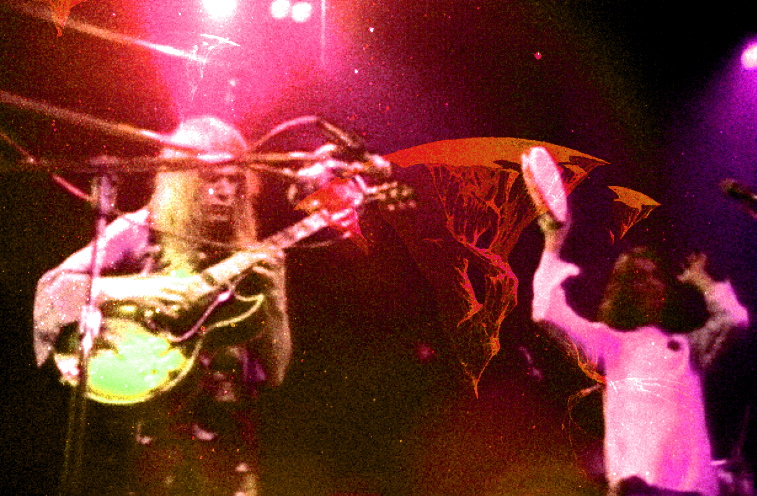
“Second of two in a row from Yes’s early 1970s glory years, though Würm is technically only part three of 1971’s Starship Trooper, which I figure most people probably have heard in one way or another. But probably not the longer, bigger, vaster 1972 live version, which truly takes off at its standalone climax – the Würm in question here. The album in question is the six sided monster known as Yessongs which was my proper introduction to Yes, the first album of theirs I actually owned. Talk about starting big. And even to this day, I have no problem arguing that at least four of those sides are a waste of nobody’s time, proving beyond any doubt that even as this crowd sometimes chased their high and mighty conceptual concerns perhaps a little (or a lot) too far, they always did it from a foundation of solid ROCK. With Würm’s deceptively simple, ever expanding power exhibit A in that regard.” (Philip Random)

44-43-42. Trilogy – Daydream Nation

“Three in a row from Sonic Youth’s Daydream Nation, the suite known as Trilogy. Because it’s that kind of album. Crucial for both the culture as a whole (I think), and me in particular (I know). Because there it was, late 1988, the Winter of Hate, things having fallen apart (it’s a long story). I’m flat on my back on the bedroom floor, my parents place (another long story), so-called grown man doing yet another season in hell, recovering from various injuries and afflictions (self-inflicted and otherwise), too spent for anything but this prolonged commitment to nothingness … which could only be filled it seems by the sprawl of one monster of an album. Which was perfect really. If you’re only going to have just one album at the end of 1988, hard rains a-falling (metaphorically and otherwise), it may as well be the four sides of music and noise inseparable known as Daydream Nation, reminding you that the biggest truths have no boundaries, the most important stories never quite add up, the best songs never quite hold together, always yearning for, grasping for, gunning for MORE … and thus they are defined as much by the chaos at their edges as the calm at their centres (or is the other way around?).

The Trilogy from Side Four gets nod here, because it’s the final climax of an album that’s full of them. Guy wanders the sprawl, gets high, likely something psychedelic because he’s truly seeing the wonder in things (The Wonder), but then comes the long slow descent, the long walk home. He runs into some jocks, gets his shit kicked, ends up fading into nothingness (Hyperstation). And then who knows what happens? Except shit erupts. Like a god damned top alcohol dragster tearing up the quarter mile, fumes so intense they cause a rare local breed of starling to go extinct. (Eliminator Jr)  Life is a nuclear eruption. A chain reaction daydream that never ends. That’s my impression anyway. What’s yours?” (Philip Random)

51. thick as a brick

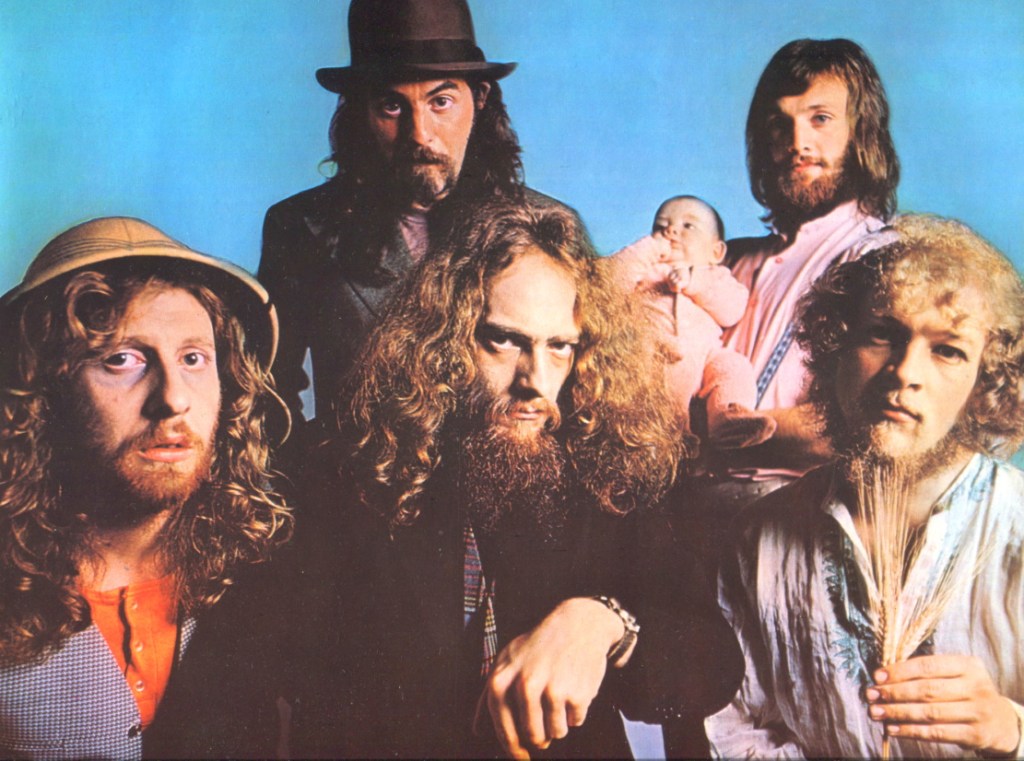
“Speaking of songs that aren’t afraid to be long, Jethro Tull’s Thick as a Brick is by far the longest on this list (clocking in at 43 plus minutes) and it shouldn’t be one second shorter, even if it’s ultimately not really about anything — an in-joke within an in-joke, which is to say, the alleged epic poetry of a pre-teen genius (one Gerald Bostock) taking on everything he sees as hypocritical, absurd, foolish about the world, society, God, his small town … and never really coming to any conclusion short of the wiser you are, the less thick you are, which is a problem when it comes to empathy, because how does a wise man begin to grasp what it is to be … well, about as dumb as a brick? Or something like that. According to Tull main man, Ian Anderson, it was intended as a lark, a piss take on the whole concept album craze of the time. Except once he started writing, things rather took on a life of their own … and the result ended up conquering the world (for a few weeks anyway in late spring, 1972). #1 in Australia, Canada, Denmark, USA. Top five in the UK, Norway, Netherlands, Italy, Germany. Apparently, it was even all the rage in Vietnam.

Barely teenage me ate it up, of course, the whole mad and epic stew of folk and rock and classical and pop tangents, the ebb and flow of themes and counter-themes, coming, going, kicking up, burning down. And yes, it really is all one big song, because try as have over the years (and trust me, I’ve tried hard), I’ve never found any piece of it that works better on its own than it does as part of the epic whole. And that includes the cover which is essentially an entire small town newspaper, twelve full-size pages of scandals, non-rabbits, art crimes, comics, even an advance review of the album itself, which probably says it best. One doubts at times the validity of what appears to be an expanding theme throughout the two continuous sides of this record but the result is at worst entertaining and at least aesthetically palatable.” (Philip Random)

62. the golden void

“The first time I ever heard mention of Hawkwind, it was some punk rock loudmouth dismissing them as metal heads who’d fried their brains on too much brown acid. Which instantly sounded like something worth investigating. What they are, or certainly were (because it’s the deep weird 1970s, I’m thinking about here), was proper anarcho-hippie-revolutionaires who made the very best of their fabulously fried brains. Because it’s f***ing true, what the guy’s singing about in The Golden Void — the corridor of flame and the psychedelic warriors who commit to it, find themselves way the f*** out at the edge of time. Because I’ve seen them in my psychedelic journeys. Hell, I’ve been one, doing my infinitesimal bit to keep the universe expanding as it must, riding that big and glorious and infinite boom to its ever blooming edge. It’s all true. Trust me. I wouldn’t lie about something like that, and neither would Hawkwind. You can hear it in the passion of the performance, every means utilized to evoke what they’ve encountered: ever spiraling, never ending, indescribable, and the thing is, they’re still there, down the golden void, and so am I, surfing fractal edges of … eternity, I guess. Time and space are like that if you’re moving fast enough. I think. I wish I could somehow prove any of this. Which I suppose I can. But not if you won’t listen to stuff like The Golden Void at proper atom splitting volume … with the right kind of ears.” (Philip Random)