93. to love somebody

“In which Nina Simone proves the experts wrong. The Bee Gees peaked long before all that disco foo-furrah of the later mid-70s, probably in 1967 with To Love Somebody which may just be the greatest song of unrequited love ever written, the proof being in the covers, everybody from the Flying Burrito Brothers to Michael Bolton to the Chambers Brothers to Billy Corgan, Roberta Flack, Michael Buble, Janis Joplin, Eric Burdon taking a swing at it … but nobody ever owned it like Ms. Simone, whose pumped up 1969 take removes all adornments, just tells it like it is-was-will-always-be. I lost somebody. I’m broken. I don’t think I’ll ever be fixed. At least I still believe in my soul.” (Philip Random)

120. interstellar overdrive

“I can’t remember who said it, but it’s stuck. Jimi Hendrix (all gods bless him to the nine known edges of the universe) gets maybe too much credit for defining what one could do, psychedelically, with an electric guitar, in 1967. Because it’s not as if The Pink Floyd‘s Syd Barrett wasn’t also unleashing gobsmackingly apocalyptic electrical storms. Maybe he didn’t have the licks, the elemental voodoo blues bubbling from his soul straight through his fingers … but he did have the angles, the great sheets of discord and noise that it was going to take to get this souped up, superlative noise clear of the earth’s orbit, off into the vastness of beyond, even if it was ultimately within (which in Syd’s case, would sadly prove a bottomless void). The rest of the band† weren’t half bad either.” (Philip Random)

126. Once I Was

“I remember taping this song from the radio one night, early teens, maybe 1973. But I didn’t catch who it was, so for some reason I just assumed it was Donovan. Which threw things off for a good twenty years. I’d describe it to people as the one where he says, if I was a soldier, and they’d say, Universal Soldier, and I’d say, no, his other soldier song. Anyway, I finally got it figured about twenty-five years later. Special thanks to Rena, an ex-punk I used to know, who had a hate on for Jeff Buckley, because she thought he was an over-hyped shadow of his dad, the then long gone but not forgotten (by Rena anyway) Tim Buckley. Anyway, I asked her to make me a tape, and there it was, Once I Was, precious evidence of a time (1967) when a young man could just pick up a guitar, sing his deceptively simple song, put poetic truth to the brutality and chaos of the world, maybe change everything forever. At least, that’s what it must’ve felt like, I guess. I was just a little kid then, not allowed anywhere near the fun part of the party.” (Philip Random)

(image: Morrison Hotel Gallery)

206. Maybe the People Would Be the Times or Between Clark and Hilldale

https://www.youtube.com/watch?v=6vI4FmyWhlA

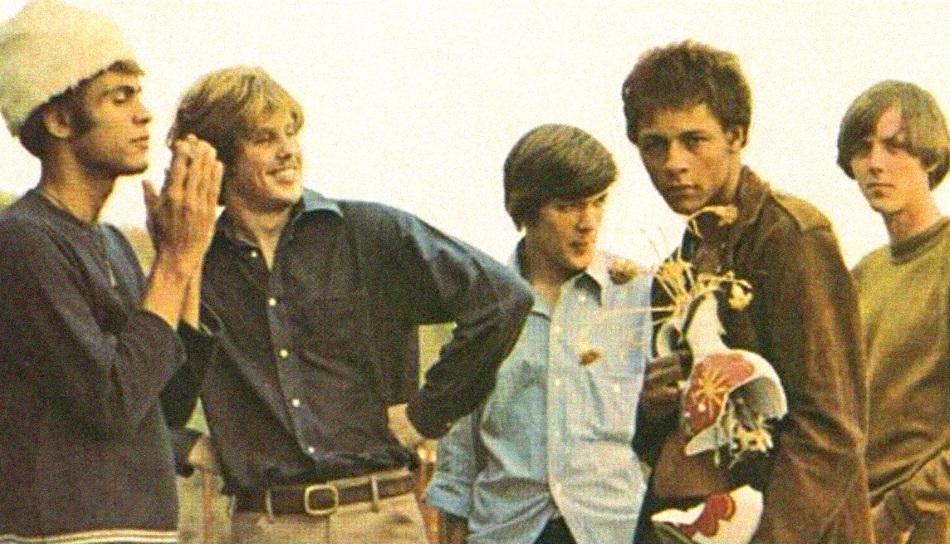
“Second of two in a row from Love‘s 1967 masterpiece Forever Changes, because it really is an album (as opposed to a collection of songs). Or as an ex-DJ friend once put it – ‘I find it hard to put tracks from Forever Changes in a mix, because they always work best next to each other, as part of the intended flow.’ And these songs aren’t exactly out to take prisoners, not obviously anyway. They’re just content to work a warm and consistent and slightly hazy (perhaps smoggy) LA vibe of heartbreak and beauty and colours forever changing and whatever else it is that Arthur Lee‘s singing about. With titles like Maybe the People Would Be the Times or Between Clark and Hilldale, he’s clearly singing about everything. But love most of all.” (Philip Random)

Love-1967-posing2

207. alone again or

“I don’t believe I heard Love’s Forever Changes until at least the 1990s. Not consciously anyway, because it is the kind of album that might’ve just slipped by. Not for any inherent weakness so much as its subtlety and, I guess, its timelessness – its strings and horns and multicoloured melodies and mysteries. It may have come out of Summer of Love Los Angeles, but heard in the background at a café or from the next room at a party, it could be almost any decade (since the 1960s anyway). As for Alone Again Or, it’s all in the title, I guess. Not so much a love song as a lack of love song, yet there is still hope. It is 1967 after all.” (Philip Random)

Love-1967-posing

210. broken arrow

Wherein young Neil Young, still just a member of Buffalo Springfield, hears the Beatles Sergeant Pepper’s and responds with an epic piece of something or other. It starts with a live snatch of one of the other songs from the album, slips sideways into various surreal reflections on this-that-other things, finishes up with some honky-tonk piano that just sort of fades away into a heartbeat. It’s all definitely about something, which in 1967 was all you really needed.

NeilYoung-1967-profile