338. pots on, gas on high

Some have called 1971’s Endless Boogie a failed experiment, but they’re wrong. Even if main man John Lee Hooker was just hanging around for much of it, letting the mostly white boys do the work (Carl Radle, Jim Gordon, Steve Miller, Gino Scaggs among others), it matters big time that he was there, bearing witness, leaning in every now and then to mumble something perhaps relevant to the temperature of the groove in question. Or maybe he really was just looking at the stove, pots full of weird potions bubbling over, setting the atmosphere itself alight.

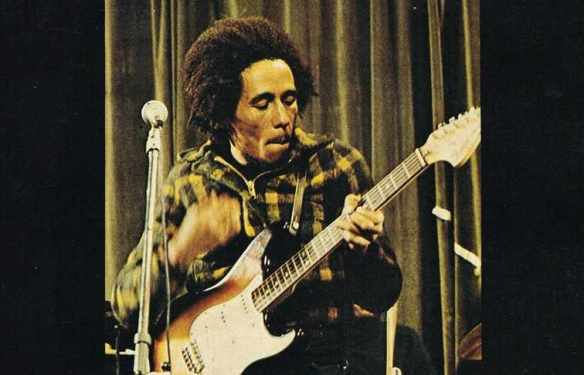
JohnLeeHooker-younger

339. Mr. Brown

Mr. Brown is definitely the most garage sounding track I’ve heard from Bob Marley, which is not a surprise given Lee Scratch Perry‘s presence at the mixing board, conjuring his unique and multihued magic. Found by me on Rasta Revolution, a 1974 compilation of various pre-fame Marley and the Wailers odds and ends, which means it probably got recorded prior to 1972. Not that Marley saw much fame anywhere beyond Jamaica until after 1974 anyway. And then I didn’t stumble onto it until at least 1994. But it still felt fresh, if a little ripe.” (Philip Random)

BobMarley-RastaRevolution


344. too many people

https://www.youtube.com/watch?v=ihAB15KunKA

“I believe I’ve covered this ground already. Paul McCartney’s post-Beatles stuff has only ever really mattered to me when he’s, to some degree, working off or in response to his old band mate John Lennon. In the case of Too Many People, that means wondering about the perhaps dubious sympathies of Power to the People, because, ummm, well there’s too many of them — people that is, happy to grab a handout (Paul never was much for nailing it lyrically). But what matters most is the track has serious bite, Paul the nice Beatle having not yet lost all of his carnivore tendencies, in spite of the vegetarianism.” (Philip Random)

359. madman across the water

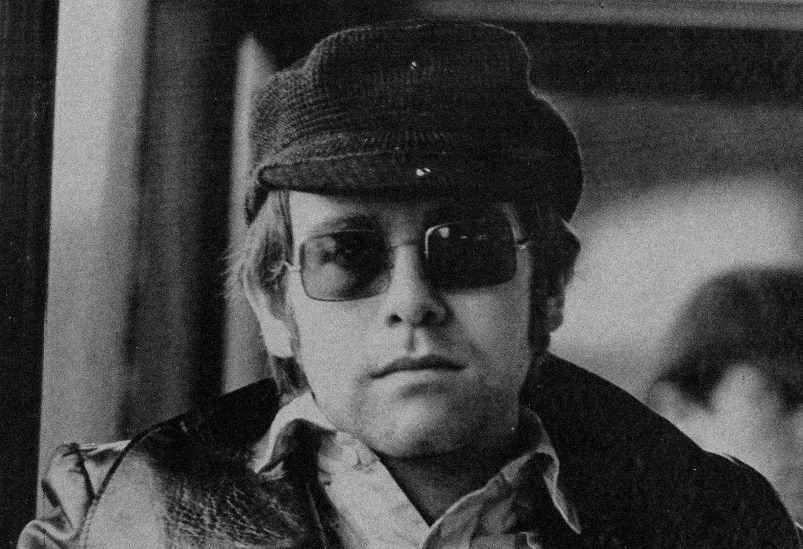
“I suppose I was born just early enough to remember a time when Elton John was not a big deal pop supernova, but rather a cool underground item, more for the older kids. Like Russ (boyfriend of a friend’s big sister) who insisted that Madman Across the Water was about Richard Nixon and Watergate, the crazy mess he’d made of things. He was the madman destroying everything he touched. Which kind of made sense in 1973. Except I later realized it was a 1971 record, and the Watergate break-ins didn’t even happen until 1972, and didn’t get much media coverage until after Mr. Nixon got himself massively re-elected with pretty much the biggest majority in American political history. Mad and confusing times, no question. Lots of scary shadows forming across the water, maybe throwing time itself out of joint. Who knew the what of anything? Except the music. The music was amazing.” (Philip Random)

EltonJohn-1971-serious


376. when I paint my masterpiece

“I think I prefer the Band’s take on When I Paint My Masterpiece to Dylan‘s. It feels a little more road weary, earned, a lonely night amid the rubble in Rome by way of deepest darkest Arkansas (or perhaps Ontario), somewhere vast and godless, and all those million miles in between playing rock and roll. Great song either way.” (Philip Random)

Band-1971

383. northern sky

“I never much bought into all the death cult stuff, the young artists who were just too pure for the world, or whatever. I guess I feel it’s the living we should focus on, the ones still dealing with it (whatever it even is) rolling with it, not ending it, intentionally or otherwise. Or as a stoned friend once put it of Jimi Hendrix, I prefer the stuff he did before he died. Which gets us to the only Nick Drake selection on this list, the only one I heard before I had any idea of why he was so damned important. True he was already long dead when I first stumbled upon Northern Sky via the Great Antilles Sampler (the 1980s sometime), but I didn’t know that. I just liked the song and it how it served the album’s overall eclectic flow – from folk to pop to free jazz to full-on experimental avant-everything. Music worth living for, goddamit.” (Philip Random)

NickDrake-1971-brickWall