145. a touching display

Wire’s 154, released in 1979, has been hard to ignore with this list, being one of those albums that helped invent the future, gave birth to all manner of sounds and textures that would come to define the decade known as the 1980s, which is now ancient history, of course. But 154 continues to stand up, songs usually as sharp and short as they are lyrically obtuse. Though A Touching Display goes the other way with a vengeance – an epic and passionate display of song as weapon, particularly as things erupt past the midpoint, like a bomber the size of a football stadium off to deliver a payload that would destroy the known world. And it did.

(source)

244. Giant

“Don’t let the tricky name fool you. The The (mostly the work of just one man, Matt Johnson) are one of the pivotal outfits of 1980s, particularly Soul Mining, their first proper album, of which Giant is the final track, and yes, it’s at least as big as its name. And forever dedicated by me to everyone who’s ever chased their passions, pushed envelopes, stayed awake way too long, and gotten torn apart for their troubles. Because Giant seems to be about all of this — scared of God, scared of hell, caving in on upon itself.” (Philip Random)

(photo: Nicola Tyson)

375. war in the east

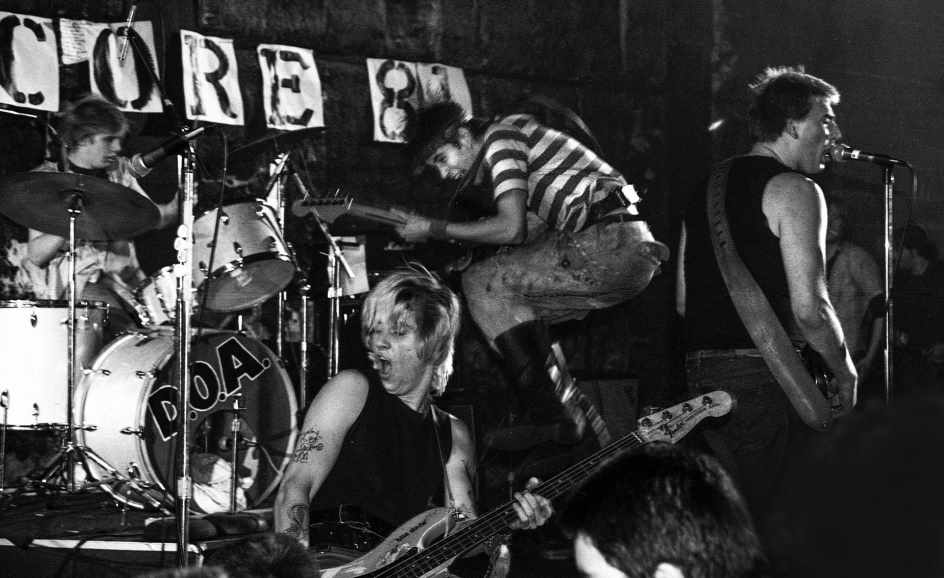
DOA saved my life any number of times in the 1980s, mainly through their live shows. From the back of auto body shops to abandoned youth clubs to at least one high school gym to the Arts Club on Seymour (still the best damned live venue the Terminal City has ever had) to at least two sold out Commodore Ballrooms, to some impromptu acoustic messing around off the edge of a movie set – it was never pretty, always somehow beautiful. And I’m pretty sure they did War In The East every time, their only reggae song, because it slowed things a touch, clarified a few key points. Fighting one another – killing for big brother. Same as it ever was.” (Philip Random)

DOA-live-1980s

377. magnificent seven

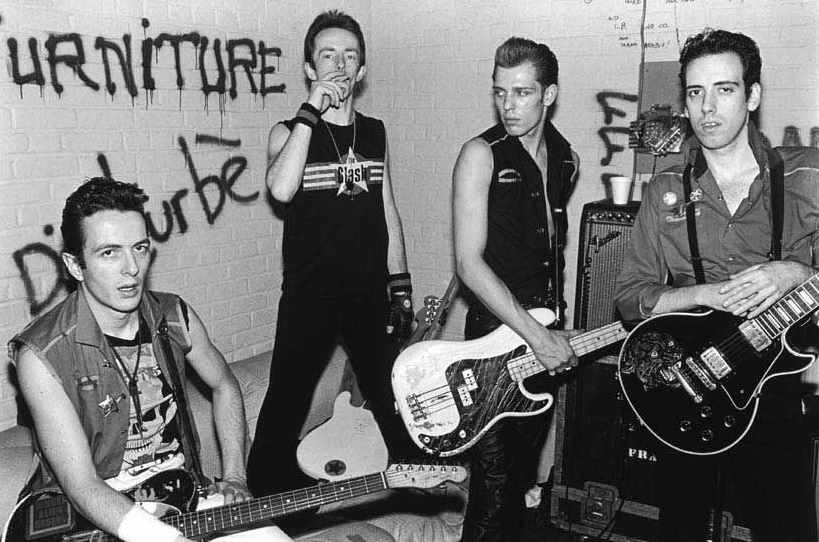
“In retrospect, we realized that The Magnificent Seven was the Clash taking on hip-hop, but in early 1981 when Sandinista first arrived, nobody in suburban Canadian wherever had even heard the term yet. So for me, it felt more like a riff on Bob Dylan, subterranean and homesick — definitely New York City in all of its turn of the decade corrosion and despair, and yet madly fertile anyway, not unlike the world as a whole at the time. The acid helped in this regard. I feel I should I apologize for this, all the acid references that seem to pop up whenever some kind of broader cultural view is required as to what really went down in the 1980s (my angle on it anyway). But why should one apologize for telling the truth? The Clash never did. Even when they were wrong.” (Philip Random)

Clash-1981-backstage

378. power and the passion

“I remember seeing Midnight Oil live when they were as big as they’d ever get (late 1980s sometime), saving the world from ecological ruin one song at a time. They introduced Power and the Passion as a surfing song, which makes sense, because there’s nothing more powerful or passionate than a big wave, all that planetary evolution and movement coalescing across four billion years of evolutionary ebb and flow and yin and yang to conjure this fabulous monster which, if your skills are to up to it, you can actually ride. So not man vs nature so much as man in tune with it, which, in their prime, The Oils were just powerful and passionate enough to make you believe was possible.” (Philip Random)

384. wild blue yonder

“In which the Screaming Blue Messiahs remind us that the rock radio of the mainstream 1980s sucked. All those Power Stations, Duran Durans, Huey Lewises, never ending hair metal catastrophes hogging up the airwaves and ramming home the point that malevolent criminals sat at the controls of the music biz, and they just didn’t care. Because we definitely had other options. We had the Messiahs who were everything their name promised: loud, angry, catchy as hell, and damned good, particularly on Gun Shy, their debut album. But nah, Bon Jovi was somehow more necessary.” (Philip Random)