14. astral weeks

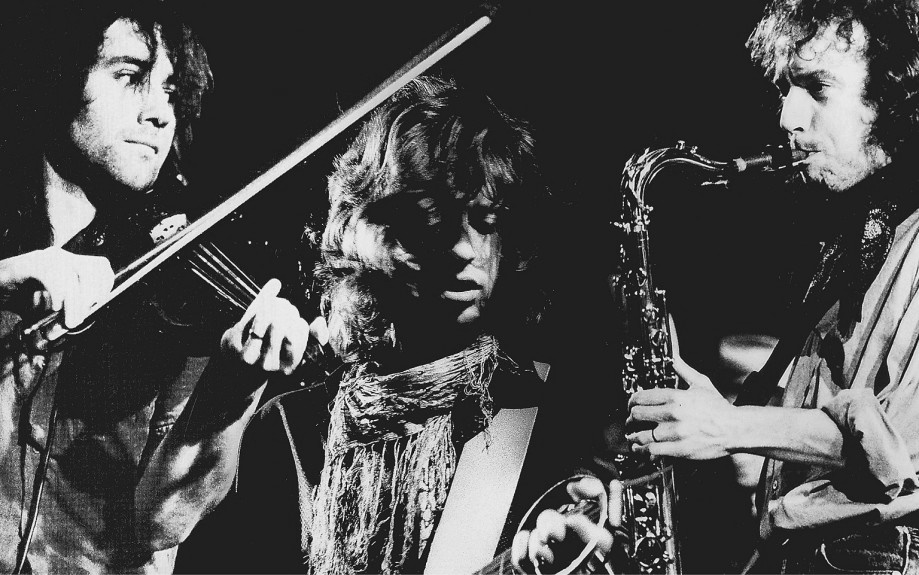
“When it comes to Van Morrison, it seems there are three types of people. The first have no opinion really. They just like it when Brown Eyed Girl gets played at weddings, and maybe Moondance, too. The second tend to argue that Van peaked with Them, howling out the Ulster punk blues circa 1965-66, and everything since has been self indulgent or whatever. And then there are those who hear the poetry of the opening lines from Astral Weeks (the song) and let’s just say, they get chills, the good kind, the transformative kind. The music humbles them, you might even say it saves them (at least in some small way) from narrow belief in a narrow universe in which everything is known, and that which isn’t will be soon enough, and thus defined by sober application of scientific data. Or nothing matters anyway, we’re all just over-evolved monkeys doing our worst to stay alive. Or it’s all fate, preordained by some all powerful, all terrible blind idiot God (and his minions). So either way – who f***ing cares?

I do actually. Which I suppose makes me a type three, the third kind, with nine Van Morrison albums on my shelf never far from reach, because you never know, nobody knows, but still we reach. And the one album that’s gotten grabbed the most over the years is Astral Weeks, the 1968 miracle that apparently just seemed to just come out of nowhere, and even today nobody’s really sure. The mystery continues, beautiful and profoundly necessary, or as Lester Bangs put it a few years after the fact: ‘In the condition I was in, it assumed at the time the quality of a beacon, a light on the far shores of the murk; what’s more, it was proof that there was something left to express artistically besides nihilism and destruction.’ In other words, yeah, what can I say? It sends me.” (Philip Random)

(image source)

55. rock’n’roll n*****

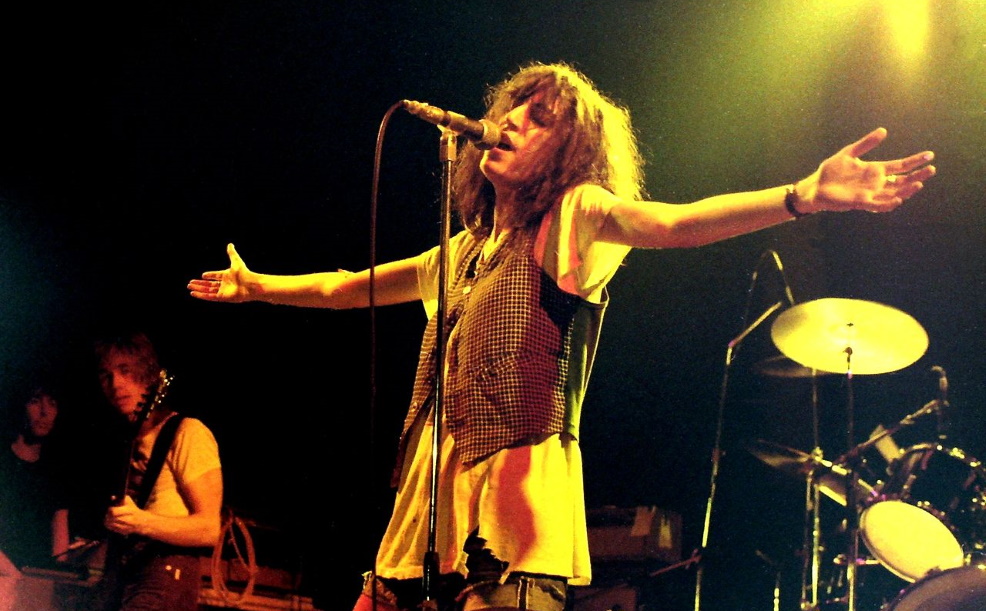
“A friend (I won’t say their name) thinks I should somehow apologize for listing Rock ‘n’ Roll Nigger. But holy shit, how do you apologize for something like this? Yeah, Patti Smith’s not black, but she is one hell of a poet, so if she says she’s a nigger of the rock ‘n’ roll variety, I guess I have to take her word for it. Even as I’m sure that some will take issue, and they’ll probably be at least as right as Ms. Smith. Just call it all confusion, I guess. Fierce and true.

Speaking of which (and maybe the best damned argument for the word, the song, the song that contains the word) is the album it showed up on. 1978’s Easter, which is otherwise a mostly restrained affair, maybe even a little a dull. Though it does contain the biggest hit she ever had, Because The Night, the one Bruce Springsteen wrote for her. Which is hilarious really — all those Boss fans buying it, then getting spat on toward the end of side one. Such were the punk rock wars of the late seventies. Confusion everywhere … and it was good.” (Philip Random)

61. desolation row

“It must’ve been early 1973 because I was still thirteen, working through the bullshit of Grade Eight, and everything else for that matter, including life itself, a big fat WHY BOTHER at the heart of pretty much all my musings. Because the Christian-God-based reality I’d had foisted on me from day one was too ridiculous to be taken remotely seriously. But what did that leave then other than meaninglessness, which was proving to be no fun at all. Meanwhile in the background, this Bob Dylan song was playing on the cool FM radio station of the moment (nobody else sounded like him, I had that much figured out) and it just kept going on and on, about postcards sent from hangings, and Cain and Abel, the Hunchback of Notre Dame, Insurance Men, the Titanic, Einstein disguised as Robin Hood, the Phantom of the Opera, Ezra Pound and T.S. Elliot … like the singer-poet-whatever in question had a damned serious message for me and he wasn’t going stop until I got it. Which I did finally. Except it wasn’t really a message. More of a feeling that I’d be wise to stop sweating the meaning stuff, and rather just get on with it, live, learn, encounter crazy shit, go to the hangings and bear witness, maybe drink cheap red wine, mix it up with marijuana, get serious about all that confusion out there (and within for that matter) not as an end but maybe as an indication that some higher wisdom-insight-glory might be waiting a little further down the line. And take notes, maybe send a few postcards of my own. Maybe this is one of them.” (Philip Random)

87. if music could talk

“Second of two in a row from the Clash‘s absurdly abundant 1979-80 phase which culminated in the six sided monster known as Sandinista – If Music Could Talk being (for me anyway) probably that album’s key track. Not for any grand power or standalone attainment, but simply for its inclusion — that a band as righteously raw and committed as The Only Band That Mattered™ could deliver such an oddly sweet and beatific ode to not rebellion-revolution-insurrection, but music itself. Which gets us back to that suburban house fire, 1981 sometime, the mixtape I had playing on the walkman care of my good friend Simon Lamb. If Armagideon Time was more fuel for the fire that was our whole broken and corrupt Cold War western culture, then If Music Could Talk, which came after, was some kind of next chapter, an odd little path leading wherever it is that only music can go, not even poetry can keep up with it, though there is a pile of poetry in If Music Could Talk, the words spilling like rain down both channels of the stereo mix, not making sense so much as easing beyond it, because we already knew it way back then even if we couldn’t quite find the words: the revolution, or evolution, or whatever it was going to take to somehow NOT annihilate ourselves in some kind of forever war – it could not be rational.” (Philip Random)

100. this is the sea

“Because sometimes the music just needs to be BIG. And who better to lay it all down than the band that put a name to such stuff, The Waterboys, who yes, as a matter of fact, were more relevant than U2 in the power and passion realm come the mid-1980s. Because in main man Mike Scott, they had a proper a poet on board, and thus more colours, clearer visions, greater incision. At least that was the argument a few months ago. This Is The Sea (album and song) versus The Unforgettable Fire (album and song), both high water marks, no doubt, but Waterboys had more of it, whatever it is, because water beats fire every time. I guess. What I can easily say now, many years after the fact, is that the album (and band) that still speaks to me is the outfit that Mr. Scott put together way back when, because unlike U2, he found a way to haul on the reins at just the right moment, stopped the whole mad and beautiful thing from charging off into the abyss of fame and ridiculousness which, I figure, mainly meant not losing focus, making sure the music and poetry that infused it remained bigger than all other concerns. Or something like that. Because like the song says, this ain’t no brook, no creek, no river even, this is this, as big as it gets. Bigger than words anyway.” (Philip Random)

105. ballrooms of Mars

“It’s easy to file T-Rex away as a glammed up (and out) pop monster whose singles absolutely nailed the zeitgeist for a year or three in the early 1970s, and they certainly did all that (in Britain anyway). But main man Marc Bolan could also just lay down a brilliant song – poetic, psychedelic, vaguely surreal, rather like the times, but also timeless, with Ballroom Of Mars (found on 1972’s Slider) exhibit A in this regard. Because that’s how I found it, at least a decade after the fact, wasting a day, drinking red wine so cheap the only way to make it palatable was to pour it over ice, maybe add a touch of something sweet. But the sun was shining and the company was good and … holy shit, who is this? It’s T-Rex, of course, gripped in the arms of the changeless madman. It means something.” (Philip Random)

(image source)