192. sound chaser

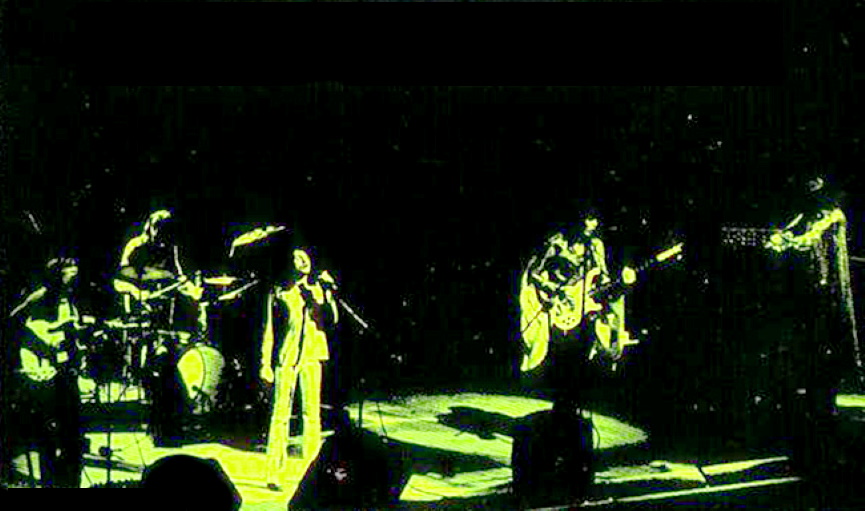
“Maybe you had to be there like I was, fifteen years old, opening song of Yes’s 1975 Relayer tour. Stravinksy’s Firebird suite crescendos, the curtains part, and holy f***ing WOW!!! Call Sound Chaser an intervention. The gods themselves imposing on my affairs. Ecstatically so. Like the Apocalypse itself, but in a good way. Like these musicians, these sorcerers, weren’t really playing this music, they were conjuring it, shaping and turning and chasing this superlative noise that just kept bubbling over, ricocheting all around, setting even the atmosphere on fire. Or as my old muso friend Robert once put it, Sound Chaser‘s the one where Yes finally got to that edge they’d been aiming for, flirting with, singing about –  not close, not over, but right the f*** on it. Maybe not their greatest achievement, but definitely their sharpest, fiercest, most dazzlingly precarious. Like a gauntlet thrown down. This is where music must go. Here are untold galaxies for us to explore. Except I guess most of us were looking the other way, or maybe just afraid. Because disco came along, and punk, and whatever else, and somehow we stopped with the progress, and that was that, mission abandoned, lost in the vastness of space.” (Philip Random)

231. elephant talk

It’s 1981 and, after a seven year hiatus, Robert Fripp has decided to reboot the monster known as King Crimson. The new album is called Discipline and it’s clear from the opening seconds of the first track Elephant Talk that it’s all for the good. Tight and modern as the album title suggests, but also dangerous and beautiful in a primal, wild animal sort of way. Special thanks to new guy Adrian Belew‘s guitar athletics. And his vocals aren’t bad either. Not exactly rapping on Elephant Talk. Not singing either. Just arguing, agreeing, babbling, bantering, ballyhooing, chattering, chit-chatting, diatribing … and so on. Which is rather what the world sounded like in those days. As it still does.

KingCrimson-1981-backstage(photo found at Youtube)

325. perpetual change

“There is absolutely nothing wrong with the original 1971 studio recording of Yes’s Perpetual Change. It just doesn’t go as far as strong as gobsmackingly wow!!! as the 1972 live recording that showed up on the triple live set Yessongs. Because they really do set the atmosphere on fire here, one of the last tracks ever recorded with drummer Bill Bruford, so yeah, the classic Yes lineup (my version of it anyway), which does need to be raved about if only for that point maybe halfway through Perpetual Change where the band are effectively playing two completely different songs at the same insane time, and it works, finally blowing off into a feedback overload that quickly segues into a Jon Anderson vocal harmony, and then BAM!!! into an extended outro, the tightest band on the planet at the time (seriously, even Led Zeppelin had to be looking over their shoulders in 1972) bouncing back and forth from improvised bits to insanely abrupt changes, on and on, higher and deeper until the only real flaw, which is the overextended drum solo (not bad, just not necessary). As a musician friend once put it, Perpetual Change is the secret to everything that was great about Yes, because they were perpetual change (up until around 1975 anyway), not just evolving from album to album, but within the songs themselves. Everything was possible and they had the smarts (and the chops) to make it so.” (Philip Random)

335. father of night, father of day

https://www.youtube.com/watch?v=YDqVURC1YR4

Manfred Mann’s Earth Band being an example of a darned strong outfit that never bothered much for hype or glory, particularly in their early days, but rather just put everything they had into the music. In the case of Father of Night Father of Day, that meant taking a sub two minute Bob Dylan acoustic throwaway about the glory of God etc and electrifying it, amplifying it glorifying until it was almost ten minutes long, and miles higher. The whole album’s a killer by the way, 1973’s Solar Fire. The Roaring Silence got all the sales and notoriety three years later because it contained Blinded By The Light, but Solar Fire is superior by orders of magnitude, the definition of a rock that was progressive, and at a time when that still mattered.” (Philip Random)

353. In held ’twas in I

Procol Harum achieved improbable levels of success with their very first single, 1967’s Whiter Shade of Pale, and it was taken rather seriously. Because it was rock meets Johan Sebastien Bach with lyrics obscure enough to almost make you forget that Bob Dylan had taken a vacation, more or less. But then what do you do for an encore? You go further, higher, deeper, longer, you give all of side two of your second album to a single seventeen minute track called In Held Twas In I, which to many ears, ranks as the first genuine prog rock epic. In other words, yeah, it probably goes too far, too high and deep, definitely too long. But what do expect from young men cut loose from the herd, more or less commanded to go climb the highest mountain? Or as the Dalai Lama puts it in the intro. Life is like a beanstalk. Isn’t it?” (Philip Random)

ProcolHarum-shineOnBrightly-ART

434. sailor’s tale

“By 1971’s Islands, their fourth album in barely two years, the force of mind and nature known as King Crimson were not so much lost as just a very long way from shore. Down to only two of the original five members, and one of them (Pete Sinfield) had never provided much in the way of actual music, just “… words, sounds and visions, cover design and painting, production” (and in fact, he was on his way out, Islands would be his last Crimson involvement). Robert Fripp, on the other hand, was firmly ensconced on whisper-to-apocalyptic-howl guitar, with Sailor’s Tale a particularly powerful offering. Just wait until whatever high you’re riding is at its peak, then crank the sound system and wait for that sucker punch eruption at around the 4-and-a-half minute point. Not a sudden eruption from silence. No this is far trickier than that. Because the song’s already charging along at that point. It just suddenly goes way further. The earth shakes. The skies open. A gaping hole gets blown from the jigsaw of time.” (Philip Random)

KingCrimson-1971-liveBlurry