13. wild horses

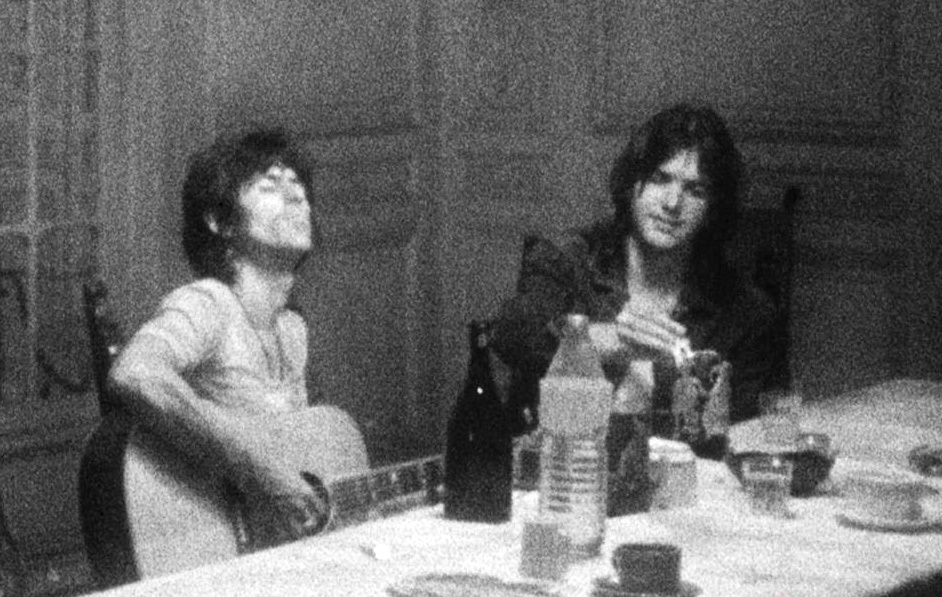
“As the story goes … well nobody seems to know for sure with this one. Who did write Wild Horses? The official story is that Jagger and Richard did it with a little help from Richard’s soul brother/fellow substance extremist Gram Parsons, then of the Flying Burrito Brothers. The darker version is that it was mainly Parsons’ tune (certainly his lyrics) and the Stones more or less stole it from him while he was too wasted to notice, with the final evidence in this regard being that they felt guilty enough to let him release his version first. I personally don’t care. Just as long as we got his version, the Flying Burrito Brothers take.

If only for the middle verse where Parsons gives voice to that dull aching pain, making for the deepest kind of soul music, immensely powerful, but also fragile, way too easily wounded. It’s a place Mick Jagger could never have hoped to touch, could never really own. He just didn’t live that dangerously. Which I suppose makes it another argument for the thievery in question. But like I said, I don’t care. And neither does Parsons, long dead now via heroin induced misadventure out near Joshua Tree – a story that’s perhaps gotten way too much notice over the years. The music being the thing. The music is always the thing.” (Philip Random)
32. can’t you hear me knocking?

Can’t You Hear My Knocking marks that precise moment at which I realized Punk Rock was dead (which is bullshit, of course, it was just going into remission for a while). It would’ve been summer 1988, a party at the joint we called the Palace of Failure. I remember I was sitting on the stairs, swigging from my ever trusty bottle of cheap red wine, no doubt stoned as well. Suddenly somebody yanked off the hardcore record that was playing, mid-song, which was fine by me, I wasn’t exactly paying attention. A few seconds of party noise and then … pure riff magic, the Rolling Stones at their most elegantly gritty, tearing everything up, the whole party immediately starting to groove. Even Mick Jagger didn’t sound that annoying. How was that possible? And then, the last two-thirds of the track, he wasn’t around anyway, just a full-on Latin groove and some hot soloing. Pure bliss and proof positive that whatever had been so horribly wrong with old school rock back in the early punk days had now passed, a dysfunction of the zeitgeist or whatever. And how the hell had I not heard this song before?  Can’t You Hear Me Knocking, from Sticky Fingers, the one with the zipper on the cover. Which means I had heard it. Because my friend Gary had that album way back when, end of Grade Seven. I distinctly remember playing with the zipper. Which is kind of weird, now that I think of it.” (Philip Random)

(Morrison Hotel Gallery)

96. why d’ya do it?

“I don’t care what all the charts were saying at the time, by 1979 the Rolling Stones were nowhere, and accelerating hard to oblivion. Certainly on record. Which makes Why D’ya Do It? the last truly great Rolling Stones record, even if they had nothing to do with it beyond Marianne Faithfull being Mick’s ex from way back. Which is the connection, I think. Because this does sound like proper Stones rocker, the way she spits the kind of bile the Stones would have still had in them if they hadn’t f***ed up on heroin and indulgence. In other words, YEAH! Why D’Ya Do It? is raunchy and vindictive and unrepentant and f***ing dirty in all the right ways. Seriously. Imagine Mick Jagger singing it in say 1972, part of the Exile on Main St. sessions. You know it would have kicked serious shit. But Ms. Faithfull’s take would still be better. And the whole Broken English album is essential, one of the very best of 1979, or any other year for that matter.” (Philip Random)

(photo: Lynn Goldsmith)

169. Sister Morphine

Marianne Faithfull’s take on Sister Morphine is probably the best Rolling Stones record ever that most people haven’t heard, even if it’s not Mick singing and it’s not technically the Stones. Because Mick is apparently playing some guitar (along with Ry Cooder) and that’s Charlie on drums. Who knows where Keith is?  Probably on the nod. Which drives home the point. Marianne Faithfull gets the credit and she deserves it all the way, but Sister Morphine is very much a 1969 Stone-truth being imparted. It’s not the Summer of Love anymore. The drugs have gotten too heavy. Souls are being crushed. None of this is going to end well.

MarianneFaithfull-1969

(image source)

250. Memo from Turner

Second of two in a row from the soundtrack to the movie called Performance, which if you haven’t seen it yet, why not? Memo From Turner being the single Mick Jagger track that puts the lie to the entirety of the rest of his so-called solo career (ie: it’s really quite good), managing to sound every bit as down and dirty and relevant as what his regular crowd were up to at the time (ie: riding their sustained peak).

mickjagger-performance

251. natural magic

Performance (the 1970 movie) is almost as good as its soundtrack, or maybe it’s the other way around. Either way, it’s a dark, dark gem – something to do with gangsters, an illusive rock star, drugs, sex, nihilism, and the only true performance ending in madness. As for the music, it covers at least as much ground and features all manner of then essential contributors, with producer/composer Jack Nitzsche at the heart of it all, delivering just what you might expect from a fatally bored rock star with piles of money but precious little inspiration, desperate for something/anything that might allow him to haul himself back into a world where anything matters.

performance-movieposter