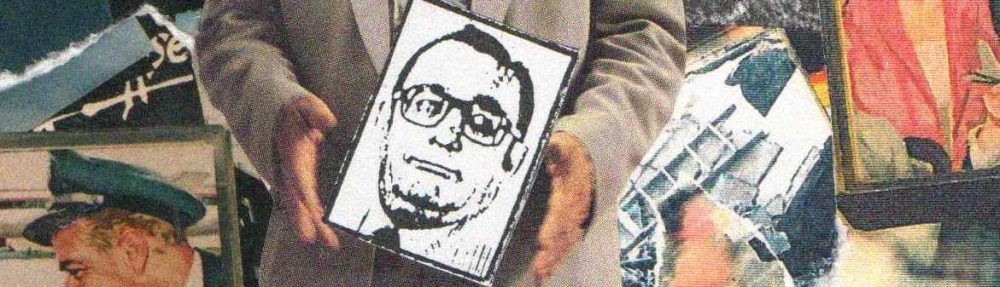
15. revolution 9

“Second of two in a row from the outfit known as The Beatles, because one record could never do justice to everything they accomplished, particularly through their so-called studio years, which never went further, wider, weirder, more provocatively abstract than the track known as Revolution 9 (I don’t think I’ve ever heard anyone call it a song). My first encounter came toward the end of Grade Seven, springtime 1972. Twelve years old and because I’m sort of responsible, I guess, I’ve been assigned to help slightly bad kid Malcolm Mills make a mix tape for the end of year dance — entrusted with the key to the school’s downstairs music room. Anyway, among other options, Malcolm’s grabbed his big brother’s copy of the Beatles White Album, intending to extract some of the obvious pop stuff. But we end up digging through all four sides, at some point wondering why there are two Revolutions listed. The first is just a slowed down version of the radio hit, and thus not near as cool. The second one’s called Revolution 9 and it’s …?
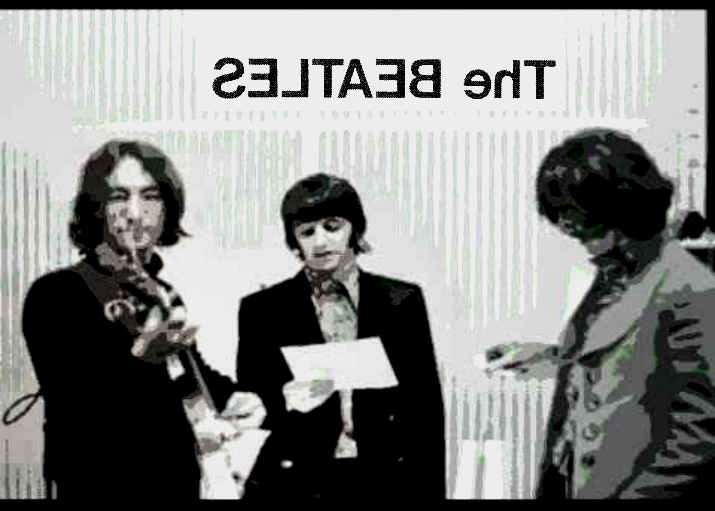
Well, it’s not really music, is it? It’s just all this baffling noise that keeps going on and on. But then Malcolm gets it. This is the one where it says Paul is dead, the secret track where all the Beatles mysteries are revealed. It has to be. So we listen again, louder, making sure we haven’t missed anything. Then a third time, VERY LOUD, which is when Mr. Walton, the Gym teacher, barges in, and asks us what the hell we’re doing. We never did finish that party tape. But I did get my tiny head turned around in a profound way – a question mark imposed upon all manner assumptions I had as to what music actually was. Or more to the point, at what point does noise become music? Or what happens when the two are indistinguishable? And who’s making the call? The secret, of course, is not to decide, just enjoy. Surf the chaos. See where it takes you. Thank you, Beatles. And Yoko, of course. No Yoko, no Revolution 9. No Beatles getting elevated to that level where they really were (still are) definitively, superlatively, eternally fab.” (Philip Random)

32. can’t you hear me knocking?

Can’t You Hear My Knocking marks that precise moment at which I realized Punk Rock was dead (which is bullshit, of course, it was just going into remission for a while). It would’ve been summer 1988, a party at the joint we called the Palace of Failure. I remember I was sitting on the stairs, swigging from my ever trusty bottle of cheap red wine, no doubt stoned as well. Suddenly somebody yanked off the hardcore record that was playing, mid-song, which was fine by me, I wasn’t exactly paying attention. A few seconds of party noise and then … pure riff magic, the Rolling Stones at their most elegantly gritty, tearing everything up, the whole party immediately starting to groove. Even Mick Jagger didn’t sound that annoying. How was that possible? And then, the last two-thirds of the track, he wasn’t around anyway, just a full-on Latin groove and some hot soloing. Pure bliss and proof positive that whatever had been so horribly wrong with old school rock back in the early punk days had now passed, a dysfunction of the zeitgeist or whatever. And how the hell had I not heard this song before?  Can’t You Hear Me Knocking, from Sticky Fingers, the one with the zipper on the cover. Which means I had heard it. Because my friend Gary had that album way back when, end of Grade Seven. I distinctly remember playing with the zipper. Which is kind of weird, now that I think of it.” (Philip Random)

(Morrison Hotel Gallery)

41. some velvet morning

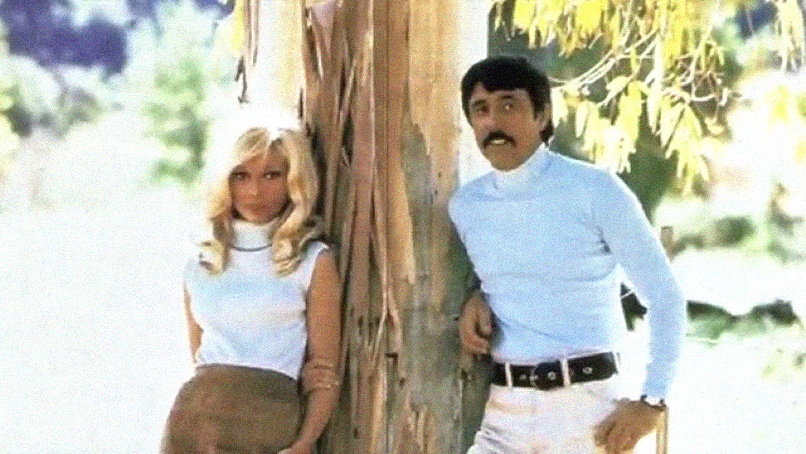
“In which Frank’s little girl Nancy (Sinatra, that is) and a shady older gent named Lee (Hazelwood) deliver the heaviest, most beautiful easy listening track I know — guy so wasted he can’t even open his girl’s gate, but some velvet morning all dragonflies and daffodils, he’ll be up to it. Maybe he’ll even tell her about Phaedra. Which I always figured was heroin, yet suburban somehow. Because nothing feels more desperate than a junkie in a bungalow with a fine trim lawn, the utilities paid, the appearances kept, the muzak on the radio morphing into something luxuriously caustic — the split level dream corroding into a void the size of a solar system, feeling no pain, but burning up regardless. Or something like that. Anyway, great song. Great album. Great sense of time and zeitgeist, a whole world gone static yet doomed to implode. What was it about America, 1968?” (Philip Random)

105. ballrooms of Mars

“It’s easy to file T-Rex away as a glammed up (and out) pop monster whose singles absolutely nailed the zeitgeist for a year or three in the early 1970s, and they certainly did all that (in Britain anyway). But main man Marc Bolan could also just lay down a brilliant song – poetic, psychedelic, vaguely surreal, rather like the times, but also timeless, with Ballroom Of Mars (found on 1972’s Slider) exhibit A in this regard. Because that’s how I found it, at least a decade after the fact, wasting a day, drinking red wine so cheap the only way to make it palatable was to pour it over ice, maybe add a touch of something sweet. But the sun was shining and the company was good and … holy shit, who is this? It’s T-Rex, of course, gripped in the arms of the changeless madman. It means something.” (Philip Random)

(image source)

218. like a rolling stone

“This being the version of Like A Rolling Stone that Jimi Hendrix played live in 1967 at the Monterrey Pop Festival. I may have been only seven at the time and thousands of miles away, but I heard it anyway, such was the superlative noise that Mr. Hendrix set loose unto the universe that evening – it cracked the speed of light, broke the bounds of time. And, of course, a loose, wandering cover of Bob Dylan’s still fresh epic had to be part of that performance, because that’s how zeitgeists work. A few songs later, he’d be setting his guitar on fire, a heat you can still feel … but that’s another story.” (Philip Random)

JimiHendrix-1967-Monterey

240. It’s all over now, Baby Blue

Technically, It’s All Over Now Baby Blue shouldn’t be on this list as its recording precedes the Like A Rolling Stone snare shot that allegedly gave impetus to the apocalypse in question. But such is the nature of a rupture in the space-time continuum, there’s often an implosion-like suck that throws key details of the recent past forward, mixes them up with the various smithereens currently floating around. Thus, we find yonder orphan with his gun crying like a fire in the sun. It makes perfect sense if you’ve got the right kind of eyes, and ears. Also worth noting: It’s All Over Now Baby Blue is the solo acoustic piece that young Bob Dylan chose to calm the crowd after his legendary electric set at the 1965 Newport Folk Festival went so horribly wrong/right. No serious apology intended.

BobDylan-1965-smoking