143. I wanna be adored

“I don’t do regrets. But that said, damn, it would’ve been cool to be born maybe fifteen years later, so that I would have still been young and fabulously confused when the Stone Roses hit with I Wanna Be Adored. Yeah, it’s narcissistic, absurd even, but it’s also true, painting a picture of what it feels like to be riding a certain wave, high and immortal, seeing all the world in such a way that you know it also sees you, beautiful and true, caught by the sun, throwing rainbows as you go … with unicorns glimpsed grazing in the distance. And oh yeah, what a band! What an album ! Maybe the best†† debut ever†††.” (Philip Random)

(image source)

179. give up the funk [tear the roof off]

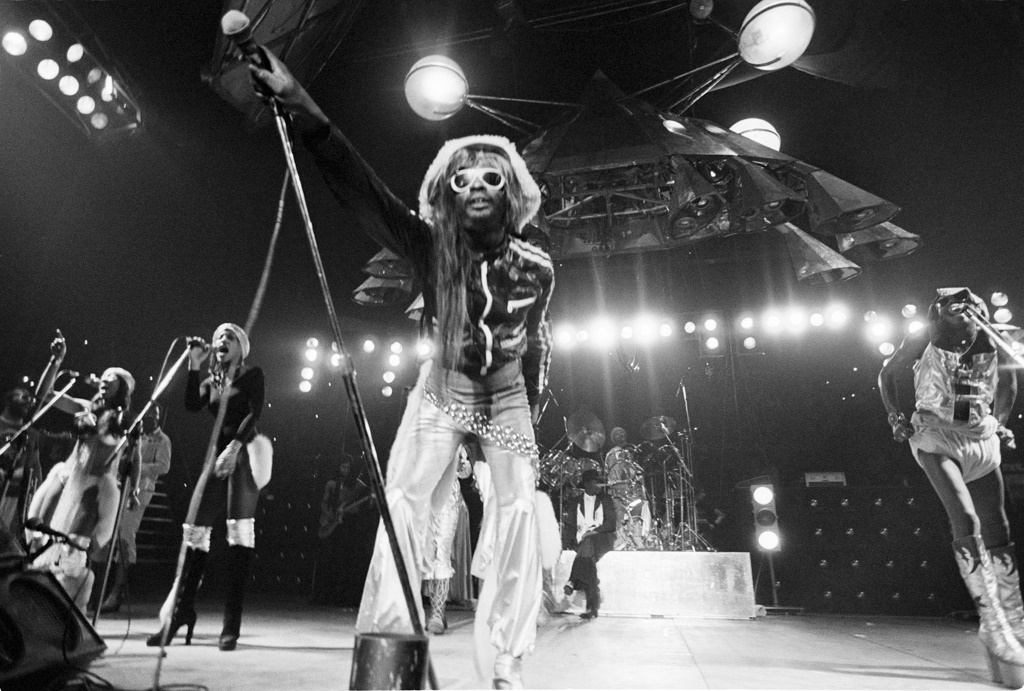
“And because it really is that great an album, another selection from Parliament’s 1975 gem, Mothership Connection, George Clinton and his crowd tearing the roof off reality itself … live anyway. Which is how I first really encountered Give Up The Funk. First via that aforementioned TV broadcast, then thirteen years later, in the flesh. The outfit was called the P-Funk All Stars now, which simplified things somewhat, but not the music. The music remained a complex and fabulous beast, multi-headed but working only one heartbeat, everything in service of the groove. They played for the better part of four hours and I don’t think anyone anywhere ever stopped moving. Phenomenal.” (Philip Random)

(photo: Lynn Goldsmith)

233. The Rainbow – Eden – Desire

“Springtime, 1989, the year I ended up in London somehow. It’s a long story, which only matters here because that’s where I found Talk Talk’s Spirit of Eden. Lonely, very low on cash, wandering through the big HMV near Piccadilly and there it was on cassette, remaindered, dead cheap. What I knew of Talk Talk was that they were a better than average synth-pop outfit. What I was completely unprepared for was the deep and spacious and ultimately epic first side of Spirit of Eden – three titles (The Rainbow, Eden + Desire) but really all one seamless song, and exactly what I needed to set my soul free long enough to get my thinking straight toward sorting out the problem of the rest of my life. I left town the next day.” (Philip Random)

263. can u dig it?

“In 1989, when Can U Dig It was fresh and entirely cool, it felt inconceivable that this particular Pop wouldn’t just eat itself, it would eat the whole f***ing world. Because Pop Will Eat Itself had a beatbox, samples, world eating smarts and guitars – who needed anything more? But it wasn’t to be. Can U Dig It did not hit massive all over and everywhere. I guess the Poppies just weren’t cute enough (or maybe black enough). And ultimately, who cares? It’s the world’s loss, not mine. I’ve still got my Furry Freak Brothers, my Twilight Zone, my pumping disco beats. And yeah, Alan Moore still knows the score.” (Philip Random)

pwei-1989-live

282. I am the resurrection

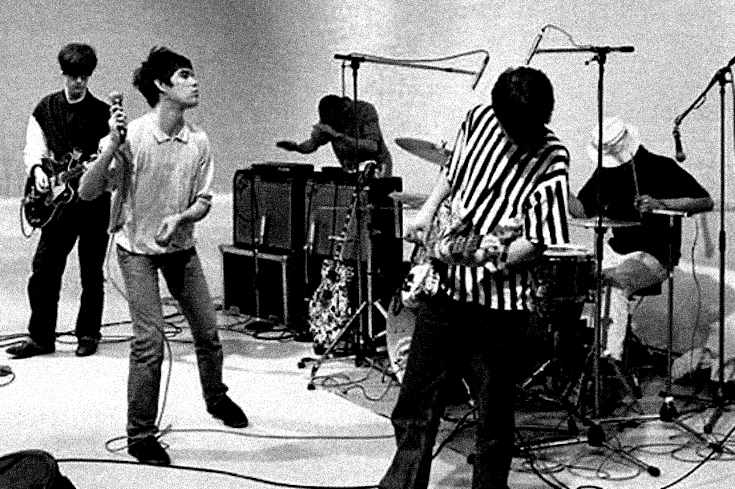
“Speaking of our Lord and Saviour Jesus Christ, call this one punk rock, Ecstatically inspired. In other words, blame it on the drugs. Or whatever it was that got the Stone Roses mixing up mystical insight and balls out provocation in such a way as to declare themselves both the resurrection and the son (singer Ian Brown anyway). I Am The Resurrection being the epic final track of their 1989 debut album that really did blow the roof off of things. The whole album, that is, every song essential. Call it a masterpiece, messianic even. These Roses really were perfect, they had all the answers, they were showing the way. But then, I guess, they started doing different drugs.” (Philip Random)

StoneRoses-1989-studioLive

379. be my power station

Alternately known as St. Che or merely Che, this outfit was basically just Tackhead anyway, which is confusing, because Tackhead was also Fats Comet and/or Mark Stewart’s Maffia and/or Little Axe (though that came later) and/or Keith Leblanc working solo. He was the drummer, the other key three players being bassist Doug Wimbish, guitarist Skip MacDonald and producer, mixmaster extraordinaire Adrian Sherwood. The first three originally connected as the house band for Sugarhill Records but it took colliding with Mr. Sherwood to truly unleash the kind of outfit that defines zeitgeists. Big fat beats, funky grooves, charged samples all toward the kind of soundtrack that a proper apocalypse needs, and the 1980s were nothing if not a rolling apocalypse (if you had the right kind of eyes). As for Che, little is known beyond this single and then, a few years after the fact, an album that hardly anyone heard. Which is pretty much par for the whole Tackhead story. Essential but you’ve got to go looking for it.

Che-narcotic